
Last Updated on October 11, 2026 by amychapman
A character suddenly looks straight into the camera and talks directly to you. The fictional world briefly admits that an audience exists. Breaking the fourth wall turns that unexpected moment into a storytelling technique with comedy, intimacy, tension, or self-aware commentary.
| Quick fact | What it means |
|---|---|
| Basic idea | A character acknowledges the audience or the fictional nature of the story |
| Origin | The concept developed from theater and the imaginary barrier between stage and audience |
| Common methods | Direct address, camera looks, audience interaction, and self-referential comments |
| Common uses | Comedy, intimacy, exposition, satire, discomfort, and commentary |
| Seen in | Theater, movies, television, books, games, and other narrative media |
| Famous examples | Ferris Bueller’s Day Off, Fleabag, Deadpool, Annie Hall, and The Big Short |
Direct answer: Breaking the fourth wall happens when a story acknowledges its audience or its own fictional construction. A character may speak to viewers, look into the camera, comment on being fictional, or otherwise cross the invisible boundary separating the story from the people experiencing it.
Table of Contents
What Does Breaking the Fourth Wall Mean?
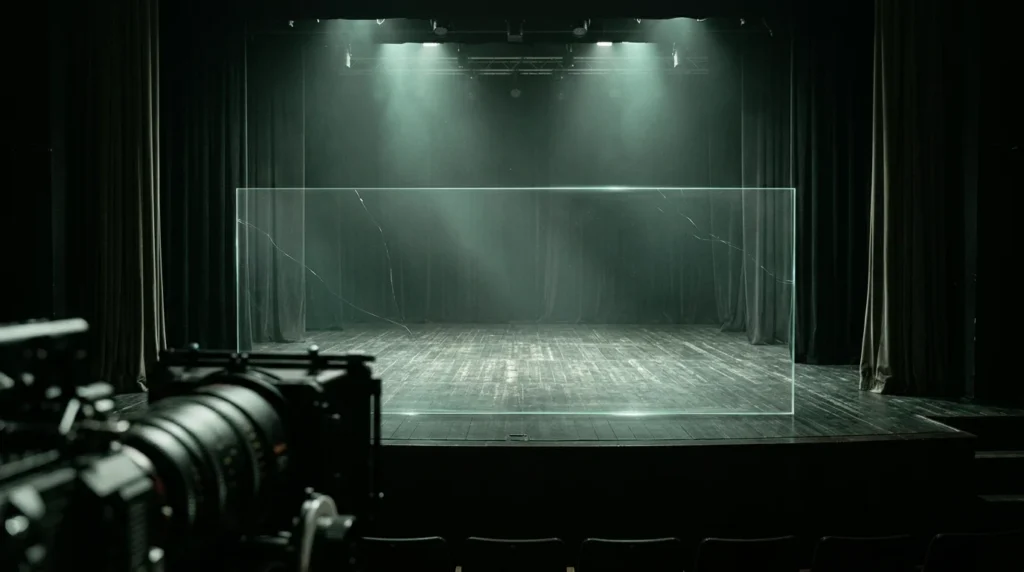
The phrase comes from the imagined boundary between performers and spectators. Traditional theater presents a room with three visible physical walls. The missing side facing the audience becomes the imaginary fourth wall.
Performers normally behave as though viewers cannot see or hear them. Movies transfer that convention to the camera and screen. Television uses the same idea when characters act as though no one is watching at home.
A deliberate break changes that relationship between character and viewer. The performer might address the audience, stare knowingly into the lens, or mention the story itself. The audience stops being an invisible observer and becomes acknowledged by the fiction.
Where Did the Idea Come From?
The concept is closely associated with French philosopher and dramatist Denis Diderot. His eighteenth-century theater writing described an imaginary barrier separating actors from spectators. Performers should behave as though the audience were absent, preserving the illusion of a private scene.
Direct audience interaction predates that theatrical theory. Ancient drama and later Renaissance theater often allowed actors to address spectators. Shakespearean asides and soliloquies also created direct relationships between performers and audiences.
Modern realistic theater made audience separation a stronger convention. That development made deliberately violating the boundary more noticeable. Film and television later inherited the same basic storytelling rule.
How Can a Story Break the Barrier?
Directly talking to viewers is the clearest method. A character can explain something, share a private thought, or make the audience an accomplice. Ferris Bueller repeatedly uses this approach throughout Ferris Bueller’s Day Off.
A simple look into the camera can produce the same effect. No dialogue is required when the character’s expression clearly acknowledges viewers. Fleabag famously uses these brief looks to create a private relationship with its audience.
Stories can become even more self-aware than direct address. Characters might mention scripts, studios, episodes, genres, or the fact that they are fictional. This stronger form of metafiction makes the story’s construction part of the joke or theme.
Why Do Writers and Directors Use It?

It creates intimacy
Direct address can make viewers feel personally connected with a character. Information shared with the audience may remain hidden from everyone else onscreen. That secrecy makes the viewer feel like a trusted confidant.
Fleabag develops much of its emotional language through that private connection. Small camera looks give viewers access to thoughts that other characters never receive. Research on the series has examined how direct address changes relationships between fictional characters and real viewers.
It makes comedy faster
Comedy often benefits from acknowledging what viewers already understand. A glance at the camera can become a punchline without additional dialogue. Self-aware characters can also mock genre conventions or ridiculous situations.
Deadpool pushes this approach much further through jokes about movies and superhero storytelling. The character treats viewers as companions who understand references other characters don’t. This creates humor at both the plot and production levels.
Digestley readers exploring screen comedy can also see the site’s coverage of Michelle Buteau’s movies and TV shows. Her career illustrates how comedic performance can move across stand-up, film, television, and voice acting.
It can explain complicated ideas
Direct address provides an efficient route for exposition. Instead of forcing information into an unnatural conversation, a story can explain something directly. This technique works especially well when complicated material needs a clear translation.
The Big Short uses unusual explanations to clarify financial concepts for viewers. The interruptions intentionally remind audiences that someone is explaining a complicated system. That disruption becomes part of the movie’s storytelling style.
It can make viewers uncomfortable
Audience acknowledgment does not always feel friendly or funny. A character staring into the lens can suddenly make viewers feel observed. That reversal can turn passive watching into discomfort.
Filmmakers can use this reaction to question the viewer’s role. Violence, manipulation, or moral choices can feel different when characters acknowledge the audience. The storytelling device can therefore challenge audiences instead of welcoming them.
Famous Examples in Movies and Television
Ferris Bueller’s Day Off remains one of the clearest mainstream examples. Ferris speaks to viewers throughout his day away from school. His comments make the audience feel like another friend joining his adventure.
Fleabag uses shorter, more personal acknowledgments. The central character repeatedly glances at the audience during conversations and awkward moments. Those looks become meaningful because they develop alongside her emotional relationships.
Deadpool makes audience awareness part of its hero’s personality. The jokes can reference filmmaking, superhero franchises, actors, and storytelling rules. Instead of occasional interruption, self-awareness becomes a consistent feature of the character.
Annie Hall also uses direct address to the audience throughout the story. Alvy Singer discusses his relationships and thoughts with viewers instead of staying completely inside conventional scenes. The device lets commentary and narrative exist together.
Television provides many other examples of self-aware storytelling. Digestley’s Brian Austin Green profile discusses BH90210, which reunited original cast members in a deliberately meta-style television project. That approach shows how a premise can play with audience knowledge of actors and television history.
Is Talking to the Camera Always a Fourth-Wall Break?
Not necessarily. Context determines whether the character recognizes an external audience. A news presenter, documentary subject, or fictional character recording a video may naturally speak toward a camera.
The key question concerns awareness. Does the character communicate with viewers who exist outside the fictional setting? If so, the moment becomes a genuine acknowledgment of an audience.
Ordinary voice-over also needs careful distinction. A narrator can speak over events without acknowledging viewers or fictional construction. Direct address becomes clearer when the character deliberately treats the audience as present.
How Is It Different From a Soliloquy or Aside?
A soliloquy traditionally lets audiences hear a character’s private thoughts. Other characters usually do not hear those thoughts. The performer may address spectators, but the technique does not automatically mean the story acknowledges its fiction.
An aside works similarly but is usually shorter. A performer briefly shares information with spectators while other characters remain unaware. Both techniques existed long before modern screen storytelling.
A fourth-wall break can use an aside or soliloquy, but the concepts are not identical. The defining feature is crossing the assumed boundary between the fictional world and its audience. That distinction prevents every piece of narration from receiving the same label.
Does the Technique Work in Books?
Yes, although literature has no physical camera or stage. A narrator or character can address readers directly. A book can also mention its pages, author, chapters, or fictional construction.
Metafiction often reminds readers they are consuming an invented story. Characters may discuss narrative rules or appear conscious of their literary existence. The principle remains similar even though the medium changes.
Games offer another interesting variation. Characters can recognize players, controls, saved progress, or interface elements. Interactive media can make audience awareness especially powerful because players already influence events.
When Does the Technique Work Best?
Consistency matters when a story introduces audience acknowledgment. Viewers quickly learn the rules a movie or series establishes. Random use can feel accidental if nothing supports the choice.
Purpose matters even more than frequency. The device should reveal character, deliver information, create comedy, or support a theme. Using it solely because another popular story did so can make the moment feel forced.
The best examples change how audiences experience a character or scene. Ferris makes viewers companions, while Fleabag turns them into confidants. Other stories use the technique for satire, explanation, surprise, or discomfort.
For more entertainment reading, Digestley also covers classic Hollywood careers through features such as Kathleen Turner’s movies and career. Readers interested in television can also explore Digestley’s coverage of top-rated Netflix series.
Why This Storytelling Device Still Feels Modern
The technique fits naturally with modern media habits. Audiences regularly watch creators speak directly to the camera on YouTube, TikTok, podcasts, and livestreams. Direct address therefore feels familiar outside fictional storytelling.
Yet fiction uses that familiarity differently. Viewers know that a scripted character cannot literally see them. Acknowledging them creates an intentional contradiction that can still feel surprising.
New productions continue finding different uses for the technique. Recent commentary describes direct address across genres, from comedy to drama, and in literary adaptations. Its longevity comes from changing the relationship between storyteller and audience.
Frequently Asked Questions
What does breaking the fourth wall mean?
Breaking the fourth wall means a character acknowledges the audience or the fictional nature of the story. That acknowledgment can happen through speech, eye contact, self-reference, or audience interaction. The moment intentionally crosses the normal boundary between fiction and spectator.
Why is it called the fourth wall?
Traditional stage sets can resemble rooms with three physical walls. The imaginary side facing the audience becomes wall number four. Actors conventionally behave as though that invisible barrier exists.
Is looking at the camera enough?
It can be, depending on the context. A meaningful look can signal that a fictional character recognizes the viewer. An accidental eyeline or an in-story camera does not automatically qualify.
Is Deadpool an example?
Yes. Deadpool frequently acknowledges audiences, movie conventions, performers, and superhero franchises. His self-awareness makes the technique part of his screen identity.
Does Fleabag use direct audience address?
Yes. The main character repeatedly looks at the viewers and shares reactions other characters cannot access. Those private moments become increasingly important to the show’s storytelling.
What is the main purpose of the technique?
There is no single purpose. Writers use it for humor, intimacy, exposition, satire, discomfort, or thematic commentary. Its effect depends on what changes once the audience becomes acknowledged.
The Takeaway
Audience awareness works because most stories first teach viewers to accept an invisible separation. Crossing that boundary changes the normal relationship between fiction and spectator. Even a brief glance from the camera can suddenly make the viewer feel included, exposed, amused, or challenged.
That flexibility explains why the device has survived across centuries and media. Theater established the convention, while movies and television developed new variations. Books and games have expanded the idea further through their own forms of self-aware storytelling.
For viewers, recognizing the technique can make familiar scenes more interesting. You can ask why a creator chose that moment and what the audience suddenly gains. That question often reveals more than simply noticing that a character looked at the camera.