

Last Updated on September 6, 2026 by Nadeem Ahmed
Pokemon card collecting has grown into a serious hobby and investment opportunity for enthusiasts around the world. Whether you are a beginner opening your first booster pack or a seasoned collector hunting rare cards, understanding card condition is essential. The condition of a Pokémon card plays a major role in determining its market value, desirability, and long-term potential.
In this complete guide, you will learn how condition affects value, what grading means, and how to keep your cards in the best possible shape. For a closer look at this, see Xbox 360 ROMs and what affects compatibility on modern emulators.
Table of Contents
Why Card Condition Matters
Condition is one of the most important factors in the pricing of Pokémon cards. Two identical cards can have completely different values based solely on their physical state.
A card in perfect condition can sell for many times more than the same card with visible wear. Collectors and buyers always prefer cards that look clean, sharp, and well-preserved.
Here is why condition matters so much:
- It determines resale value in the collector market
- It affects grading scores from professional services
- It increases buyer trust and demand
- It ensures long-term investment potential
Common Pokémon Card Condition Levels
Collectors use standard condition categories to describe the quality of a card. Understanding these levels helps you evaluate your own collection and make smarter buying decisions.
Mint Condition
Mint cards are nearly perfect. They have no visible flaws and look as if they just came out of the pack.
- Sharp corners
- No scratches or whitening
- Clean surface and edges
These cards are the most valuable and highly sought-after.
Near Mint Condition
Near Mint cards may have very slight imperfections, but they still look excellent overall.
- Minor edge wear
- Very light surface marks
- No major damage
This is the most common condition for valuable cards in circulation.
Lightly Played Condition
Lightly Played cards show some signs of use but remain in good shape.
- Small scratches or scuffs
- Slight corner wear
- Minor whitening on edges
These cards are more affordable but less desirable for collectors focused on perfection.
Moderately Played to Heavily Played
These cards show clear signs of wear and handling.
- Noticeable scratches and creases
- Edge damage and fading
- Possible bending
Their value drops significantly compared to higher condition cards.
Damaged Condition
Damaged cards have major flaws that affect both appearance and structure.
- Creases, tears, or stains
- Water damage
- Significant bending
These cards usually hold minimal value unless they are extremely rare.
Read More About: Online Slot Games Explained in Simple Terms
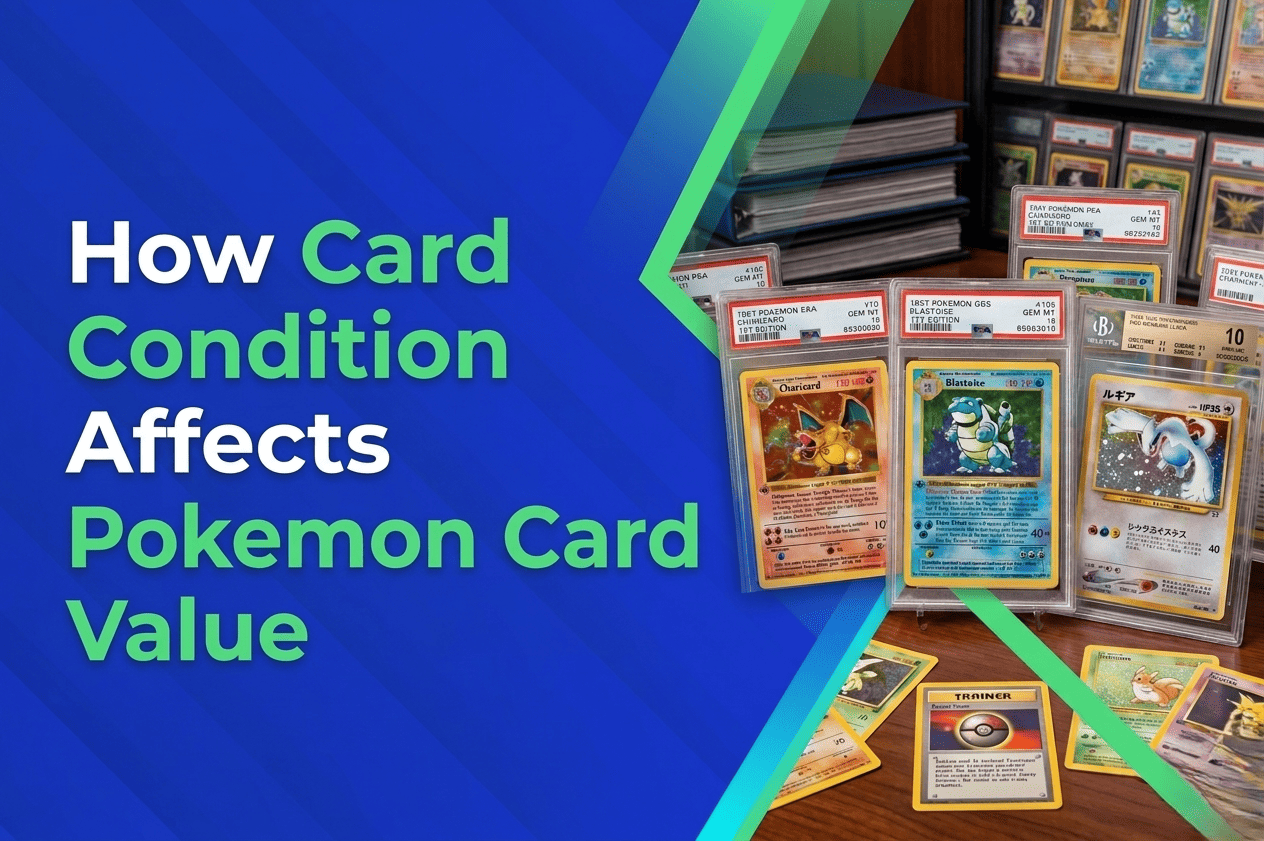
How Grading Impacts Value
Professional grading services evaluate Pokémon cards and assign them a score based on condition. This score can greatly increase a card’s value, especially for rare or vintage items.
Graded cards are sealed in protective cases and labelled with a number, usually on a scale from 1 to 10. A higher grade means better condition and higher market value.
Key benefits of grading include:
- Authentication of genuine cards
- Increased buyer confidence
- Higher resale prices for top grades
- Long-term protection
For example, a rare card graded a perfect score can sell for several times more than an ungraded version of the same card. Explore our graded Pokémon cards to see examples of professionally evaluated cards.
Key Factors That Affect Card Condition
Several small details contribute to the overall condition of a Pokémon card. Paying attention to these factors can help you better understand value.
- Corners: Sharp corners indicate minimal handling
- Edges: Clean edges without whitening are preferred
- Surface: Free from scratches, dents, or print lines
- Centring: Balanced borders increase appeal
- Cleanliness: No stains, dirt, or fingerprints
Even minor flaws in these areas can impact the final value significantly.
How to Protect and Maintain Card Condition
Proper storage and handling are essential to preserve the value of your Pokémon cards. Simple precautions can make a big difference over time.
Here are the best ways to protect your collection:
- Use protective sleeves immediately after opening packs
- Store cards in toploaders or binder pages
- Keep cards in a cool and dry environment
- Avoid direct sunlight and humidity
- Handle cards with clean hands
- Do not stack cards loosely without protection
These steps help maintain the condition and prevent long-term damage.
Final Thoughts
Card condition is a key factor that directly influences the value of Pokémon cards. From mint condition collectibles to heavily played cards, each level has its place in the market, but the difference in pricing can be significant.
By understanding condition grading, identifying quality factors, and storing your cards properly, you can protect your collection and maximise its value over time. Whether you are collecting for fun or investing for the future, maintaining card condition should always be a top priority.
Check out our full Pokémon cards collection to explore products that help you store and protect your cards while growing your collection.
If you want to know more about Winzir NBA Betting in the Philippines then visit our Gaming category.


