
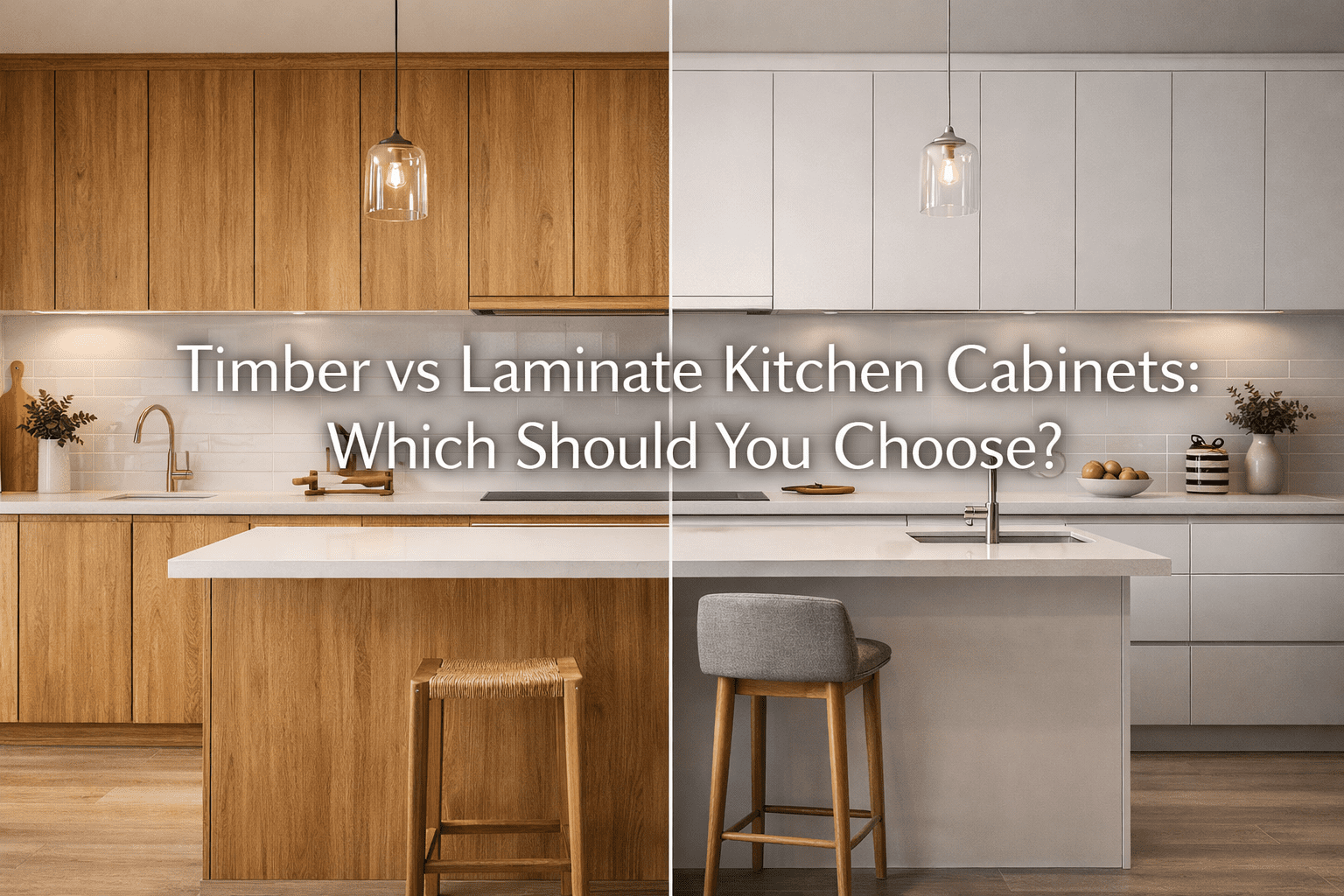
Choosing the right kitchen cabinets is one of the most important decisions in any kitchen renovation. Cabinets not only define the look of your space but also impact durability, maintenance, and overall functionality. If you’re planning a new kitchen or upgrading an existing one, you’ve likely come across the debate: timber vs laminate kitchen cabinets.
Both options have their advantages, and the right choice ultimately depends on your style preferences, budget, and lifestyle. In this guide, we’ll break down the key differences to help you make an informed decision for your home.
Table of Contents
Understanding Timber Kitchen Cabinets
Timber kitchen cabinets are made from natural wood, offering a timeless and high-end appearance. They’re a popular choice for homeowners who want warmth, character, and a premium finish in their kitchen.
Pros of Timber Cabinets
One of the biggest advantages of timber is its natural beauty. Each piece of wood has unique grain patterns, giving your kitchen a distinctive look that can’t be replicated. Timber cabinets are also incredibly durable and can last for decades when properly maintained.
Another benefit is flexibility in design. A skilled cabinetry designer can create bespoke timber cabinets tailored to your exact preferences, making them ideal for custom cabinetry projects.
Timber is also easy to refinish. If your cabinets start to look worn over time, they can be sanded and restained instead of replaced, making them a long-term investment.
Cons of Timber Cabinets
Despite their appeal, timber cabinets tend to be more expensive than laminate options. The cost of materials and craftsmanship can add up, especially in larger kitchens or full custom kitchen renovations.
Timber is also sensitive to moisture and temperature changes. Without proper sealing and care, it may expand, contract, or warp over time—something to consider in busy kitchens.
Understanding Laminate Kitchen Cabinets
Laminate cabinets are made by applying a thin decorative layer over a core material like MDF or particleboard. They’re known for their affordability and versatility in modern kitchen designs.
Pros of Laminate Cabinets
Laminate cabinets are budget-friendly, making them a popular choice for many kitchen renovations. They offer a wide range of colours, textures, and finishes, including options that mimic the look of timber.
They’re also low maintenance. Unlike timber, laminate surfaces are resistant to stains, scratches, and moisture, making them ideal for busy households.
Another advantage is consistency. If you prefer a sleek, uniform appearance, laminate delivers a clean and modern look that works well in contemporary kitchens.
Cons of Laminate Cabinets
While laminate is durable, it doesn’t offer the same longevity as solid timber. Once damaged, it’s often difficult to repair, and in many cases, the affected panels need to be replaced.
Additionally, laminate may lack the natural warmth and authenticity of timber. While high-quality finishes can closely resemble wood, they don’t fully replicate its texture and feel.
Timber vs Laminate: Key Differences
When comparing timber and laminate cabinets, it’s important to consider a few key factors:
Cost:
Laminate is generally more affordable, making it suitable for budget-conscious projects. Timber, on the other hand, is a higher investment but adds long-term value.
Durability:
Timber is long-lasting and can be refinished, whereas laminate is resistant to daily wear but harder to repair once damaged.
Maintenance:
Laminate requires minimal upkeep, while timber needs regular care to maintain its appearance and prevent damage.
Which Option Should You Choose?
The choice between timber and laminate ultimately depends on your priorities.
If you’re after a luxurious, long-lasting kitchen with a unique character, timber is an excellent option. It works particularly well in high-end homes and bespoke custom cabinetry designs where craftsmanship is a priority.
On the other hand, if you’re looking for a cost-effective, low-maintenance solution with modern appeal, laminate is a smart choice. It’s perfect for practical, stylish kitchens that need to withstand daily use.
The Role of a Cabinetry Designer
No matter which material you choose, working with an experienced cabinetry designer can make a significant difference. They can help you balance aesthetics, functionality, and budget while ensuring your cabinets suit your lifestyle.
From selecting materials to optimising storage, a professional designer plays a key role in delivering successful custom kitchen renovations that meet your expectations.
Final Thoughts
Both timber and laminate kitchen cabinets have their strengths, and there’s no one-size-fits-all answer. Your decision should be based on your design vision, budget, and how you use your kitchen.
For homeowners investing in premium kitchen renovations, timber offers timeless appeal and long-term value. Meanwhile, laminate provides a practical and stylish alternative for those seeking affordability and ease of maintenance.
By understanding the differences and working with the right professionals, you can create a kitchen that not only looks great but also performs beautifully for years to come.
Apart from that, if you want to know more about Design Your Space: Chairs and Sofas for Dubai Living then visit our Home Improvement category.