
Something looks human, but your brain immediately tells you that something is wrong. The eyes seem lifeless, the smile lasts too long, or the movement feels unnaturally precise. That disturbing reaction is the engine behind uncanny valley horror.
| Quick fact | What it means |
|---|---|
| Core idea | An almost-human figure can feel more disturbing than an obviously artificial one |
| Origin | Japanese roboticist Masahiro Mori described the phenomenon in 1970 |
| Common triggers | Faces, eyes, smiles, movement, voices, dolls, robots, CGI, and humanlike creatures |
| Horror advantage | Filmmakers can create fear before a character does anything openly dangerous |
| Scientific caution | Researchers still debate why the effect occurs and when it appears |
| Common media | Horror movies, animation, games, digital characters, robots, and AI-generated imagery |
Direct answer: The uncanny valley describes discomfort caused by something that looks or behaves almost human without feeling completely human. Horror creators exploit that gap through unnatural faces, movement, eye contact, voices, and timing. The result can make an otherwise harmless character feel threatening before viewers understand why.
Table of Contents
Key Takeaways
- Near-human characters can become unsettling when familiar human cues do not match.
- Facial movement, eye behavior, voice, and body motion can increase the effect.
- Dolls, robots, digital humans, and altered human faces are especially useful horror subjects.
- Scientists have proposed several explanations, but no single theory explains every reaction.
- Perceptual mismatch has received stronger research support than several broader explanations.
- Horror works especially well when audiences notice something wrong before characters do.
What Does the Uncanny Valley Horror?

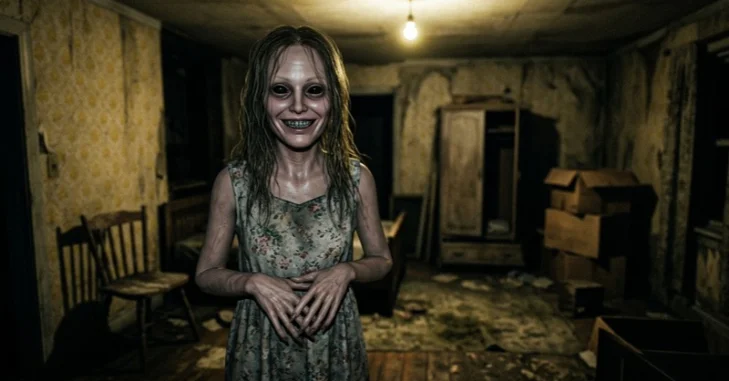
The Uncanny Valley Horror concept originated with roboticist Masahiro Mori, who introduced the idea in a 1970 essay about human reactions to robots. He proposed that greater human resemblance usually increases familiarity and affection. However, in Uncanny Valley Horror, that positive response may suddenly turn into discomfort or fear when an artificial figure looks almost, but not perfectly, human.
Imagine a simple cartoon robot with large painted eyes and a metal body. Nobody expects its face to behave exactly like a living person. A highly realistic android creates different expectations because every tiny error becomes easier to notice.
The problem can appear in computer animation, prosthetics, dolls, humanoid robots, and digital characters. Cambridge Dictionary similarly describes the term as discomfort toward computer-generated or robotic figures resembling living humans. The important element is not simple ugliness but disturbing closeness to normal human appearance.
Why Uncanny Valley Horror Feels So Disturbing
One leading explanation involves perceptual mismatch, where different human cues appear inconsistent with each other. A face might have realistic skin but strangely artificial eyes. A realistic character might also move with timing that feels mechanical.
A major research review found inconsistent evidence for the broadest version of Mori’s original hypothesis. The researchers found better support for explanations involving mismatched perceptual features. They concluded that the effect appears under specific conditions rather than following every increase in human resemblance.
Later research also examined inconsistent realism among humanlike characters. One study found that realism inconsistencies could reduce familiarity and increase feelings described as cold or eerie. This helps explain why tiny errors can matter more on realistic faces than clearly stylized ones.
Your Brain Expects Human Rules
People spend their lives reading faces, gestures, posture, and voices. You recognize subtle social signals without consciously examining every muscle movement. An almost-human figure can violate those learned patterns while remaining close enough to activate them.
That conflict creates a useful opening for horror directors. Viewers see a familiar face while receiving signals that the face does not behave correctly. Fear can therefore arrive before the story reveals any physical danger.
Movement Can Make an Almost-Human Figure Worse
Static images are only part of the effect because movement introduces more expectations. Human smiles develop through coordinated changes involving the mouth, cheeks, and eyes. Walking, blinking, turning, and breathing also follow patterns viewers know intuitively.
Mori specifically discussed movement and described how changed facial timing could make a robotic smile appear disturbing. Later research has not consistently confirmed every proposed movement effect. Still, mismatched motion remains a powerful practical tool for horror filmmaking.
Creators can exploit this response with delayed head turns, stiff limbs, frozen smiles, or unusually smooth movement. The audience may struggle to identify the exact problem. That uncertainty often makes the image more effective than an obvious monster.
How Horror Creators Build the Effect
Horror usually works best when it changes something familiar instead of replacing familiarity completely. A normal human face provides a powerful starting point because audiences understand its expected behavior. Changing one feature can then create stronger discomfort than designing an entirely unfamiliar creature.
Eyes That Do Not Match the Face
Eyes carry information about attention, emotion, and intention. A smiling mouth paired with blank eyes creates conflicting signals. Characters can appear conscious yet emotionally absent because the usual facial cues no longer agree.
Digital artists can produce a similar effect through unusually smooth skin or overly symmetrical features. The viewer recognizes the image as human while noticing subtle artificiality. That tension can become threatening without requiring blood or violence.
Smiles Held for Too Long
A natural smile changes from moment to moment. Horror characters sometimes hold expressions beyond the point where viewers expect them to relax. The expression then stops feeling social and starts feeling deliberate.
This technique becomes stronger when another character behaves as though nothing unusual happened. The audience recognizes the warning before the fictional characters react. That gap creates anticipation and encourages viewers to search the frame for additional danger.
Voices That Sound Nearly Normal
Visual realism is not the only source of discomfort. A realistic face can become disturbing when its voice has unnatural rhythm, timing, emotion, or synchronization. FilmDaft notes that mismatched audio and visual movement can contribute to uncanny reactions.
Modern horror can also create this tension through synthetic voices and digitally altered dialogue. A voice may contain recognizable speech while lacking expected emotional variation. That makes the speaker feel present but strangely disconnected from the body.
Readers interested in related screen techniques can explore Digestley’s explanation of breaking the fourth wall. Both devices change how audiences relate to characters, although they create that disruption in different ways.
Famous Examples of the Effect in Horror and Entertainment
Several movies, games, and characters illustrate different routes toward an almost-human feeling. Not every example represents a scientifically proven instance of the phenomenon. They are useful because each highlights a recognizable type of perceptual mismatch.
| Example | What feels “off” | Why it matters |
|---|---|---|
| M3GAN | Doll-like face combined with lifelike movement | Mixes childlike familiarity with artificial behavior |
| Ring / The Ring | Distorted human movement and appearance | Turns a recognizable human form into something physically wrong |
| Silent Hill 2 | Humanlike bodies with altered features and motion | Familiar anatomy becomes difficult to categorize |
| The Polar Express | Realistic digital humans with imperfect facial cues | Became a famous non-horror reference for unsettling digital realism |
| Lifelike dolls and mannequins | Human proportions without normal life signals | Familiar faces lack expected movement and emotion |
M3GAN provides an especially clear horror example because the character deliberately combines human and artificial qualities. Her face resembles a child, yet her behavior remains controlled and manufactured. Lists of disturbing near-human media regularly identify the character as a modern example.
The Polar Express is not a horror movie, but discussions often mention its digital characters when explaining the concept. Their realism raised expectations for natural human facial behavior. Scientific and technology writing has repeatedly used the film as a familiar cultural reference.
Fans interested in related film and television topics can browse Digestley’s entertainment coverage. Readers curious about artificial intelligence and digital systems can also explore Digestley’s technology section.
Why Dolls, Mannequins, and Humanlike Robots Work So Well
A doll is clearly an object, but its design asks viewers to recognize a person. Eyes suggest attention, a mouth suggests speech, and limbs suggest movement. Horror stories can exploit every expectation created by those features.
The same principle explains the lasting appeal of mannequins and wax figures. Their bodies appear human while remaining unnaturally still. When they finally move, the shift breaks an assumption the audience has already formed.
Robots offer another variation because viewers know movement is possible from the beginning. The tension instead comes from wondering how accurately the machine will imitate human behavior. Small mistakes in expression or timing can become more disturbing as realism increases.
Is the Uncanny Valley Scientifically Proven?
The concept is influential, but scientists do not treat every version of it as settled fact. Studies have produced different results depending on the faces, robots, movements, and methods researchers tested. A 2015 review found limited support for the simplest version of the theory.
That does not make the idea useless. Researchers have found evidence supporting narrower mechanisms, especially mismatches between features with different realism levels. Neuroscience studies have also identified differences in how people process human and artificial agents.
The safest conclusion is that several mechanisms may create similar feelings of eeriness. Context, expectations, movement, familiarity, and visual consistency can all matter. Horror artists do not need one universal explanation to use those reactions effectively.
Why This Type of Horror Is Becoming More Relevant
Digital humans are becoming common across games, advertisements, social platforms, and generative artificial intelligence. Audiences increasingly encounter faces that may look realistic without representing an ordinary photographed person. That gives creators new ways to experiment with the boundary between authentic and artificial appearance.
The strongest horror may not require obvious monsters in that environment. A familiar-looking person with one incorrect detail can create immediate tension. Viewers may spend several seconds trying to identify the flaw before recognizing the threat.
This makes near-human fear especially suited to modern screen culture. Technology keeps improving realism while horror keeps searching for tiny ways to break it. The closer an imitation gets, the more interesting its remaining imperfections can become.
The Takeaway
Near-human horror works because recognition and rejection can happen almost simultaneously. Your brain sees something familiar while detecting signals that fail to fit familiar human behavior. That contradiction gives filmmakers a way to create tension before revealing any explicit threat.
The effect also explains why small choices can outperform elaborate monsters. An incorrect smile, delayed blink, or unnatural head movement may be enough. Once you recognize these techniques, many unsettling horror scenes become easier to understand.
For more explanations of film, television, and storytelling techniques, continue through Digestley’s entertainment coverage. Pay attention to the next almost-human character that makes you uncomfortable. The most frightening detail may be the one you cannot immediately name.
Frequently Asked Questions
What is uncanny valley horror?
Uncanny valley horror uses almost-human faces, bodies, voices, or movements to create discomfort and fear. The subject appears familiar enough to trigger normal expectations about people. Small violations of those expectations then make the character feel disturbing.
Why are almost-human faces scary?
One explanation involves conflicting perceptual information. Different parts of a face may suggest different levels of realism or emotional meaning. Research has found notable support for mismatch-based explanations of eeriness.
Why do dolls often feel creepy?
Dolls reproduce human features while lacking normal human behavior. Their eyes, faces, and bodies encourage viewers to interpret them socially. Their stillness can therefore conflict with expectations created by their humanlike appearance.
Is the effect the same for everyone?
No universal reaction has been established across every person and stimulus. Studies vary considerably according to the images, movements, and measurement methods involved. Familiarity and individual expectations can also influence how a character feels.
Can animation accidentally become unsettling?
Yes, especially when a production aims for high realism without matching every facial and movement cue. Viewers may notice unnatural eyes, expressions, skin, or timing. A stylized character can sometimes avoid those expectations by looking intentionally artificial.