

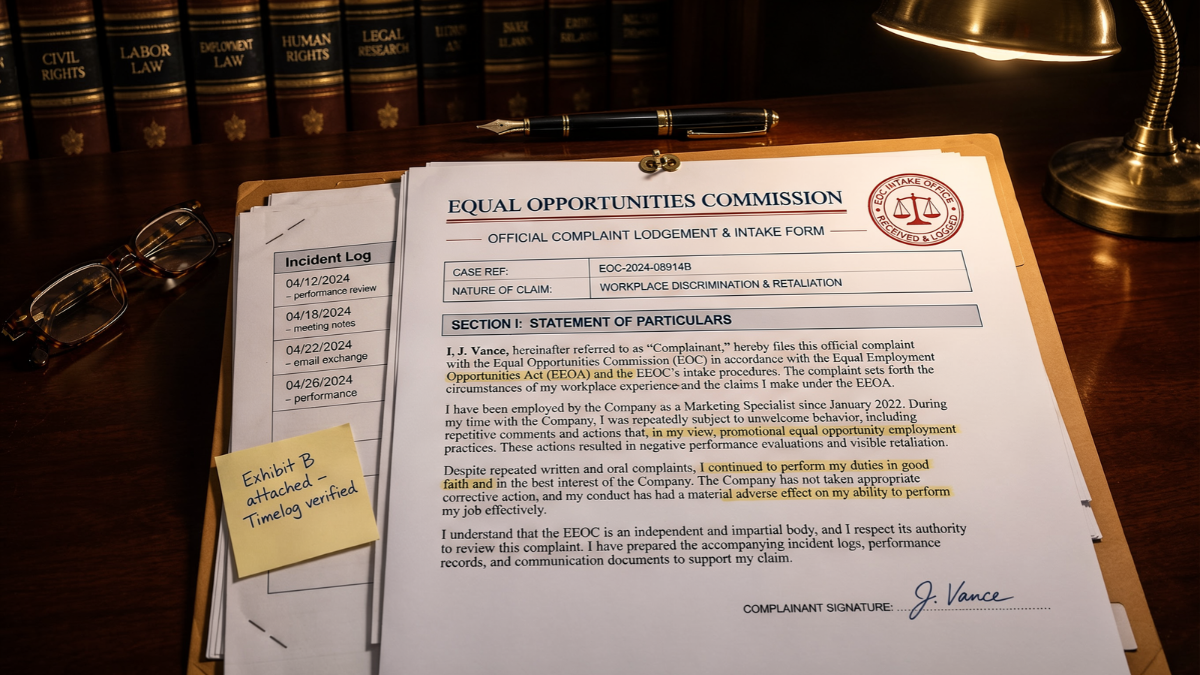
If you searched for an EOC complaint, you probably mean a charge filed with the EEOC over workplace discrimination. The U.S. Equal Employment Opportunity Commission calls the formal filing a Charge of Discrimination. It asks the EEOC to review alleged discrimination and take appropriate action. An EEOC charge can involve discrimination based on race, color, religion, sex, national origin, disability, age, or genetic information. Retaliation for reporting discrimination can also violate federal employment law. Filing deadlines are strict, so waiting can affect your legal options. Quick answer: The term usually refers to an EEOC Charge of Discrimination in the United States. Most workers must file within 180 days, although some claims receive a 300-day deadline. Federal employees use a different EEO process and generally must contact an EEO Counselor within 45 days.
Table of Contents
Key Facts About EEOC Charges
| Issue | What U.S. workers should know |
|---|---|
| Correct federal agency | U.S. Equal Employment Opportunity Commission |
| Formal filing name | Charge of Discrimination |
| Common deadline | 180 calendar days |
| Possible extended deadline | 300 days in qualifying jurisdictions |
| Federal employees | Usually contact an EEO Counselor within 45 days |
| Employer notification | EEOC generally notifies the employer after filing |
| Possible next steps | Mediation, investigation, settlement, dismissal, or right-to-sue notice |
| Retaliation | Federal law protects participation in the EEO process |
What Does an EOC Complaint Mean?

The EOC Complaint phrase commonly appears when someone is searching for information about an EEOC charge. The federal agency’s full name is the Equal Employment Opportunity Commission. Its role includes enforcing several federal laws against employment discrimination. A formal filing is called a Charge of Discrimination rather than simply a complaint. The charge states that an employer, employment agency, or labor organization engaged in unlawful discrimination. It asks the EEOC to examine the allegations and determine the appropriate response. An internal workplace complaint is not automatically the same as an EEOC charge. Reporting an issue to human resources may be useful, but it does not always preserve federal filing deadlines. The EEOC warns that another grievance process usually does not stop its filing clock.
Who Can File an EEOC Charge?
Employees and job applicants may file when they believe covered employment discrimination occurred. Federal protections vary depending on the legal claim and employer size. The facts of each situation determine whether an EEOC-enforced law applies. Common allegations include discrimination involving hiring, firing, promotion, compensation, harassment, or other employment conditions. Accommodation disputes involving disability, religion, or pregnancy can also fall under federal protections. Retaliation after protected discrimination activity can create a separate legal concern. You do not need to prove your entire case before contacting the EEOC. The filing process allows the agency to assess the allegations and available information. Still, organized records can help explain your claim clearly.
EEOC Filing Deadlines
For many private-sector and state or local government workers, the basic filing deadline is 180 calendar days. That period begins from the discriminatory action being challenged. A state or local anti-discrimination law can extend the period to 300 days in qualifying cases. The extension rules are not identical for every legal claim. Age discrimination claims have specific requirements for receiving the longer period. Because deadlines depend on location and claim type, workers should verify their deadline promptly. Internal complaints, union grievances, mediation, or arbitration generally do not extend the EEOC deadline. This point can surprise employees trying to solve problems inside the workplace first. You can review the EEOC’s official filing deadlines before relying on an internal process.
Federal Employees Have Different Deadlines
Federal workers and federal job applicants follow a separate EEO complaint process. They generally must contact an agency EEO Counselor within 45 days of the discriminatory event. Missing that early step can create serious procedural problems. After counseling ends, the employee may receive notice explaining how to file a formal complaint. The formal complaint generally must be filed within 15 calendar days after receiving that notice. These rules differ sharply from the normal 180-day or 300-day charge process. Anyone employed by a federal agency should use the federal-sector procedure rather than private-sector instructions. The EEOC federal-sector overview explains the sequence. Checking the correct process early helps prevent avoidable filing errors.
How to File an EOC Complaint With the EEOC
The process starts by gathering the facts behind your workplace discrimination concern. Prepare names, contact information, dates, and a short explanation of what happened. Also identify why you believe the treatment involved a protected characteristic or retaliation. The EEOC Public Portal allows workers to submit an inquiry and arrange an intake interview. You may also contact an EEOC office for filing assistance. The agency lists additional filing options on its official charge-filing page. Follow these seven practical steps:
1. Write down the discriminatory events. Record dates, people involved, decisions, statements, and relevant workplace actions. 2. Identify the protected basis. Determine whether the issue involves race, religion, sex, disability, age, retaliation, or another protected ground. 3. Check your filing deadline. Confirm whether your situation uses 180 days, 300 days, or federal-sector deadlines. 4. Gather useful records. Save emails, messages, schedules, evaluations, policies, accommodation requests, and other relevant documents. 5. Start the EEOC intake process. Use the Public Portal or contact the appropriate EEOC office. 6. Review the proposed charge carefully. Make sure names, dates, allegations, and protected bases are accurate before signing. 7. Keep your charge information. Save your charge number and monitor communications through the EEOC process.
Evidence does not need to be dramatic to matter. A message, performance record, schedule change, or policy document can support an important factual point. Digestley’s guide to probative evidence in U.S. law explains how evidence can help establish disputed facts.
What Information Should You Include?
The EEOC generally needs your contact information and information about the employer involved. You should also describe the alleged discriminatory actions and their dates. Explain why you believe those actions involved an unlawful discriminatory basis. Keep the description focused on facts instead of insults or assumptions. A clear timeline often makes complicated events easier to understand. Include important details showing who acted, what occurred, and when it happened. You should preserve original records whenever possible. Avoid changing messages, screenshots, or documents because altered evidence may create unnecessary disputes. Store copies somewhere you can access even if you later leave the employer.
What Happens After You File?
After a charge is filed, the EEOC generally sends notice to the employer within ten days. The case may then be considered for mediation. If mediation does not resolve the matter, an investigation may follow. During an investigation, the EEOC can request documents and information from both sides. The employer may submit a position statement explaining its response. The worker can use the Public Portal to review case information and submit supporting material. The EEOC says investigations take about ten months on average, although individual cases vary. Mediation can sometimes resolve eligible disputes much faster. Complex facts, witnesses, records, and agency workload can affect the timeline.
Can Your Employer Retaliate After a Complaint?
Employers cannot lawfully retaliate against someone because that person participates in an EEO proceeding. Protected participation can include filing a charge, providing information, or serving as a witness. Federal law also protects many reasonable actions opposing workplace discrimination. Retaliation can take forms beyond termination. Depending on the facts, it may involve reduced opportunities, threats, unfair discipline, schedule changes, or increased scrutiny. The key question often involves whether the action occurred because of protected EEO activity. Protection against retaliation does not remove ordinary job responsibilities. Employers may still enforce legitimate, non-discriminatory workplace rules. Workers should document suspected retaliation and promptly report new events to the investigator handling their charge.
What Can the EEOC Do With Your Charge?
The EEOC may close a charge when federal law does not cover the allegations. It can also dismiss cases that were filed too late. A closure generally comes with information explaining the worker’s legal rights. If the EEOC believes discrimination may have occurred, it can seek voluntary resolution with the employer. Possible remedies may include monetary relief, reinstatement, policy changes, or other corrective measures. The specific remedy depends on the law and the facts involved. If settlement efforts fail, the agency decides whether it will pursue litigation itself. The EEOC cannot litigate every case where it finds potential discrimination. Depending on the claim, the worker may receive a Notice of Right to Sue.
When Should You Speak With an Employment Lawyer?
You are not required to hire a lawyer before filing an EEOC charge. Many workers complete the administrative process without legal representation. Still, legal advice can become useful when deadlines, damages, or complicated evidence are involved. Consider advice sooner when termination, significant lost income, or serious retaliation has occurred. Counsel may also help when several legal claims overlap. Digestley’s overview of choosing a lawyer for a lawsuit provides broader information about legal representation. A lawyer can also explain what happens after a right-to-sue notice arrives. Many federal discrimination claims carry a 90-day court deadline after that notice. Missing a court deadline can prevent a claim from moving forward. For more general legal explainers, readers can also browse Digestley’s Law section. Those guides provide background on lawsuits, evidence, legal terminology, and other U.S. legal topics. They do not replace advice from a qualified attorney about a particular dispute.
Common EEOC Filing Mistakes to Avoid
A major mistake is assuming an internal HR complaint pauses the federal filing deadline. The EEOC specifically warns that other dispute processes usually do not extend that period. Track the agency deadline separately from workplace procedures. Another mistake involves submitting an unclear timeline without important dates. Dates help determine timeliness and connect evidence to specific employment decisions. Organizing events chronologically can make the charge easier to understand. Workers should also avoid deleting records after filing. Keep relevant emails, messages, reviews, policies, and notices where legally permitted. Careful recordkeeping may become important during an investigation or later lawsuit.
The Bottom Line
This search usually leads to the federal EEOC Charge of Discrimination process. The most important first step is identifying the correct filing deadline. Waiting for an internal workplace process can place important rights at risk. Gather a clear timeline, preserve relevant records, and verify which procedure applies to your employment. Private-sector workers usually face different rules from federal employees. Use official EEOC resources whenever a filing deadline or procedural requirement is uncertain. If your deadline is close, contact the EEOC promptly instead of relying on general online information. Complex cases may also justify speaking with an employment attorney. Acting early gives you more time to understand your choices and prepare your claim.
Frequently Asked Questions
Is an EOC complaint the same as an EEOC charge?
People searching for this term usually mean an EEOC charge involving employment discrimination. The official federal agency is the Equal Employment Opportunity Commission. Its formal private-sector filing is called a Charge of Discrimination.
How long do I have to file an EEOC charge?
The standard deadline is generally 180 calendar days from the discriminatory action. It can extend to 300 days when qualifying state or local protections apply. Federal employees normally face a separate 45-day counseling deadline.
Does filing with HR count as filing with the EEOC?
An internal HR complaint usually does not count as an EEOC charge. It also generally does not stop the EEOC filing deadline. Workers using internal procedures should still monitor their federal deadline.
Does the employer find out about the charge?
Yes, the EEOC generally notifies the employer after a formal charge is filed. The agency says notification normally occurs within ten days. Employers may then receive requests for information or mediation.
Can I be fired for filing an EEOC charge?
An employer cannot lawfully punish you because you participated in protected EEO activity. Retaliation can include actions other than firing. Legitimate discipline based on unrelated, non-discriminatory reasons can still occur.
How long does an EEOC investigation take?
There is no single timeline for every investigation. The EEOC currently says investigations average about ten months. Mediation can resolve some eligible cases in less time.