
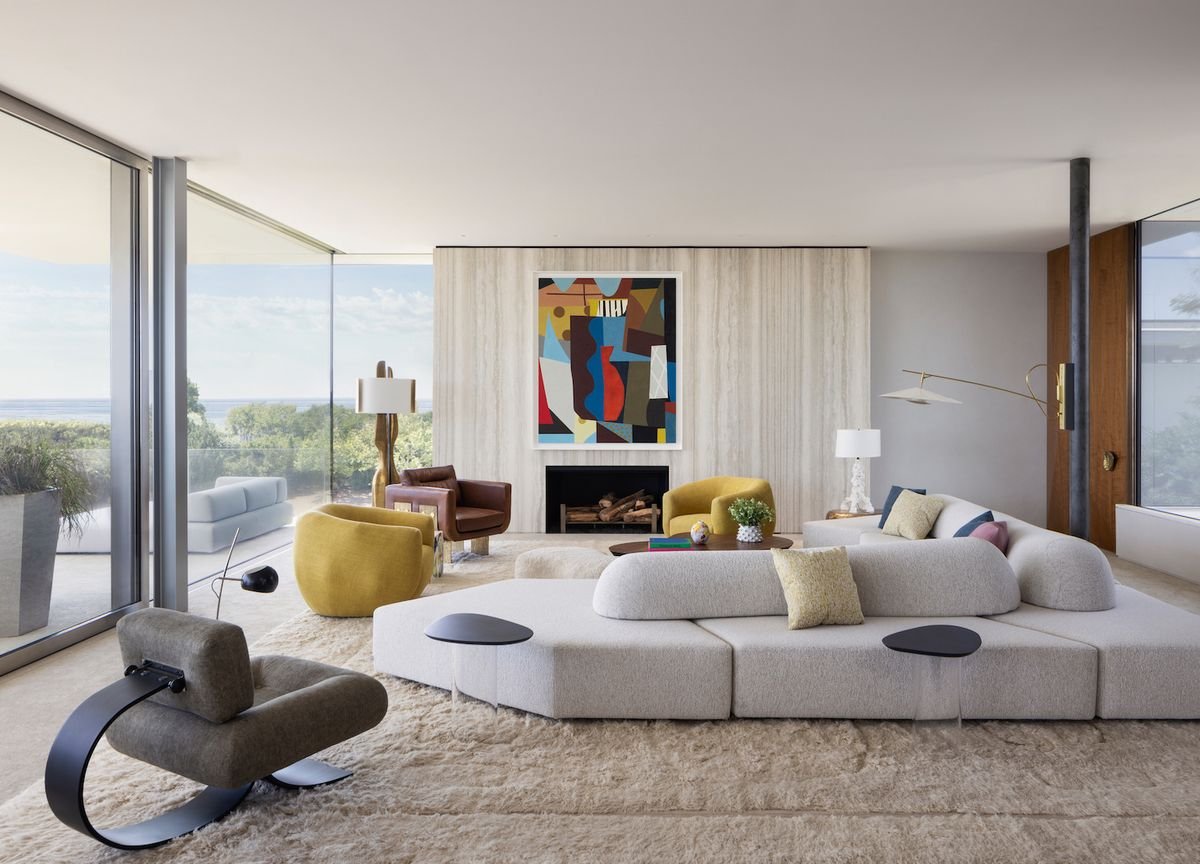
There is a common assumption in interior styling that when a room feels unfinished, underwhelming, or a little flat, the solution is simple: add more. More cushions, more objects, more styling pieces, more layers, more visual detail. On the surface, it makes sense. If a space feels like it is missing something, surely the answer is to fill it.
But that instinct often leads people in the wrong direction.
Some of the most inviting, memorable, and well-balanced interiors are not the ones packed with decorative items. They are the ones where every piece feels intentional, where the room can breathe, and where the furniture, layout, texture, and proportions are doing the heavy lifting. In many cases, what a space needs are not more decor at all. It needs better choices, better balance, and a little more restraint.
You can see this clearly in living spaces where the core pieces are already strong. A beautifully shaped sofa, a well-proportioned rug, warm lighting, and thoughtfully selected round side tables can do far more for a room than a collection of extra ornaments scattered across every available surface.
Table of Contents
Decor Can’t Fix a Room That Lacks Structure
One of the biggest misconceptions in styling is treating decor as a shortcut. Decorative accessories can absolutely add character, softness, and personality, but they are not a substitute for a room that functions well and feels visually grounded.
If the layout is awkward, the scale is off, or the furniture feels disconnected, adding more styling pieces usually just draws attention to the problem. A room with too many small items but no clear visual anchor can end up feeling cluttered rather than curated. Instead of creating warmth, it creates noise.
This is why well-designed homes often feel calm even when they are visually interesting. The foundation is doing the work first. The decor is there to support the room, not rescue it.
Too Much Decor Can Make a Space Feel Smaller
This is especially true in modern homes, apartments, and open-plan spaces where every piece has a visual impact. When shelves, sideboards, coffee tables, and corners are all heavily styled, the room can begin to feel crowded very quickly.
It is not only about physical clutter. Visual clutter matters just as much.
When the eye has nowhere to rest, the whole space can feel busy and unsettled. Even beautiful objects lose their impact when they are competing with too many other beautiful objects. A vase stops feeling sculptural. A stack of books starts looking random. A console arrangement that should feel elegant begins to feel overworked.
Sometimes removing a few items does more for a room than buying five new ones ever could.
Good Styling Is About Contrast, Not Constant Filling
The rooms that feel polished are usually the ones that understand contrast. They combine full and empty, soft and structured, light and dark, smooth and textured. This is what creates depth and interest.
If every surface is filled, there is no contrast. The eye does not register certain objects as special because everything is demanding attention at once.
Negative space is one of the most underrated styling tools in any home. A bare corner beside a statement chair can make the chair feel more intentional. A mostly clear console can give a single lamp or artwork more presence. A coffee table with just a few well-chosen items often feels more elevated than one covered edge to edge in decorative pieces.
Less styling does not mean less thought. In many cases, it means more.
The Best Rooms Prioritise Function First
It is easy to get caught up in how a room photographs rather than how it actually feels to live in. Over-decorated spaces often look like they have been styled for a moment, not for everyday life.
A home should still feel comfortable, usable, and relaxed. If every surface is too precious to touch, if there is nowhere practical to put a drink, if cushions need to be moved every time someone sits down, the room may be styled, but it is not necessarily working.
This is where thoughtful furniture selection matters so much. Pieces that are beautiful and practical help a room feel complete without relying on excess decoration. A well-designed side table, an armchair with presence, or a storage piece with natural texture can contribute visually while still earning its place.
Personality Comes from Editing, Not Piling On
There is a difference between a home with personality and a home full of things. Personality comes through in the choices that feel genuine to the people living there. It might be a vintage object, a favourite artwork, a distinctive material, or a colour palette that reflects someone’s taste. It does not require every surface to be full.
In fact, too much decor can dilute personality rather than strengthen it.
When a room is overloaded with trend-driven pieces or generic styling accessories, it can start to feel anonymous. Ironically, adding more can make a home feel less individual. Editing back allows the meaningful pieces to stand out. It gives the room a clearer point of view.
That is often what separates a home that feels stylish from one that feels staged.
Texture and Shape Often Matter More Than Accessories
When people feel a room lacks warmth or interest, they often assume they need extra decorative items. But what the room may really need is better texture or stronger shape.
For example, a space with too many flat finishes can feel lifeless no matter how many objects are placed in it. Bringing in timber, linen, boucle, stone, or ceramic can add far more depth than simply layering on more decor. Likewise, introducing curved silhouettes, softer edges, or varied forms can shift the mood of a room without adding clutter.
This is why furniture and lighting choices tend to have a bigger impact than people expect. They shape the room at a foundational level. Decor should build on that, not carry the entire design.
Restraint Often Looks More Expensive
There is reason high-end interiors rarely feel overcrowded. They tend to use fewer items, but each one is considered. The effect is confident rather than busy.
Restraint gives a room a sense of clarity. It suggests that the space does not need to prove itself by filling every gap. There is enough strength in the materials, proportions, and composition already.
That feeling can be achieved in everyday homes too. It is not about spending more. It is about being selective. A room with fewer, better-placed pieces often feels more refined than one trying to squeeze in every styling idea at once.
When a Room Feels “Off”, Ask Better Questions
Before buying more decor, it is worth pausing and asking what the room is actually lacking. Is it warmth? Contrast? Scale? Function? Texture? Better lighting? A stronger focal point? Often the issue sits deeper than accessories alone can solve.
This small shift in thinking can save money, reduce clutter, and lead to much better results. Instead of asking, “What else can I add?”, a better question is, “What is this room trying to do, and what is getting in the way?”
Sometimes the answer is a new lamp. Sometimes it is a rug. Sometimes it is removing half the items already there.
Decor has its place, and the right finishing touches can absolutely transform a room
But more decor is not automatically better decor. A home does not feel complete because every surface has been filled. It feels complete when the room is balanced, functional, expressive, and easy to be in.
The most successful interiors are rarely the busiest ones. They are the ones that know when to stop.
So, if a room in your home feels like it needs something, resist the urge to immediately pile on more. Look at the layout. Look at the furniture. Look at the light, the scale, the shapes, and the materials. You may find that what the room really needs is not more at all, but a clearer sense of purpose.
Apart from that, if you want to know more about Design Your Space: Chairs and Sofas for Dubai Living then visit our Home Improvement category.