

Last Updated on June 30, 2026 by
A well-installed commercial epoxy floor coating can transform industrial and business spaces with its seamless appearance, chemical resistance, and exceptional strength. From warehouses and factories to retail showrooms and healthcare facilities, epoxy flooring is valued for its ability to withstand heavy traffic while maintaining a clean, professional look. However, even the toughest flooring systems require proper care to preserve their performance and appearance over time.
Routine maintenance not only protects the surface from premature wear but also extends the lifespan of the commercial epoxy floor coating, saving property owners from costly repairs or early replacement. Dirt buildup, chemical exposure, improper cleaning techniques, and neglect can gradually compromise the integrity of the surface. Understanding how to properly care for epoxy floors ensures that they continue to deliver durability, safety, and visual appeal for many years.
Table of Contents
Understanding How Epoxy Flooring Wears Over Time
Epoxy flooring is engineered to be resilient, but no surface is immune to daily stress. Continuous foot traffic, heavy machinery, wheeled equipment, and shifting loads can slowly create signs of wear. While epoxy is highly resistant to abrasions and impact, microscopic scratches may develop over time, particularly in high-traffic zones. If not addressed, these minor imperfections can accumulate dirt and reduce the floor’s glossy finish.
Environmental conditions also influence the longevity of a commercial epoxy floor coating. Temperature fluctuations may cause slight expansions and contractions in the underlying concrete, which can place stress on the bonded surface. In facilities where moisture levels are not well controlled, vapor pressure from beneath the slab may gradually weaken adhesion.
Chemical exposure presents another challenge. Although epoxy is designed to resist spills from oils, solvents, and cleaning agents, prolonged contact with harsh chemicals can cause discoloration or surface dullness. Facilities that frequently handle corrosive materials must adopt protective cleaning habits to prevent gradual degradation.
Ultraviolet exposure can also affect epoxy surfaces installed in areas with consistent sunlight. Over time, certain epoxy formulations may yellow or fade when exposed to strong UV rays. While this does not typically compromise structural integrity, it can alter the appearance of the floor.
Recognizing these wear factors helps facility managers implement proactive maintenance routines. Instead of reacting to visible damage, preventative care preserves the smooth finish and protective qualities that make epoxy flooring a reliable solution for demanding environments.
Daily and Weekly Cleaning Practices That Protect Epoxy Surfaces
Consistent cleaning is one of the most effective ways to extend the life of a commercial epoxy floor coating. Dust, sand, and debris act like abrasive particles when stepped on or driven over, gradually scratching the surface. Removing these materials before they accumulate helps maintain the floor’s smooth texture and polished look.
Dry cleaning methods such as sweeping and dust mopping should be performed regularly, especially in areas exposed to outdoor contaminants. Soft microfiber dust mops are particularly effective because they trap fine particles without scratching the surface. Facilities with high activity levels may benefit from daily sweeping to prevent grit from embedding into the finish.
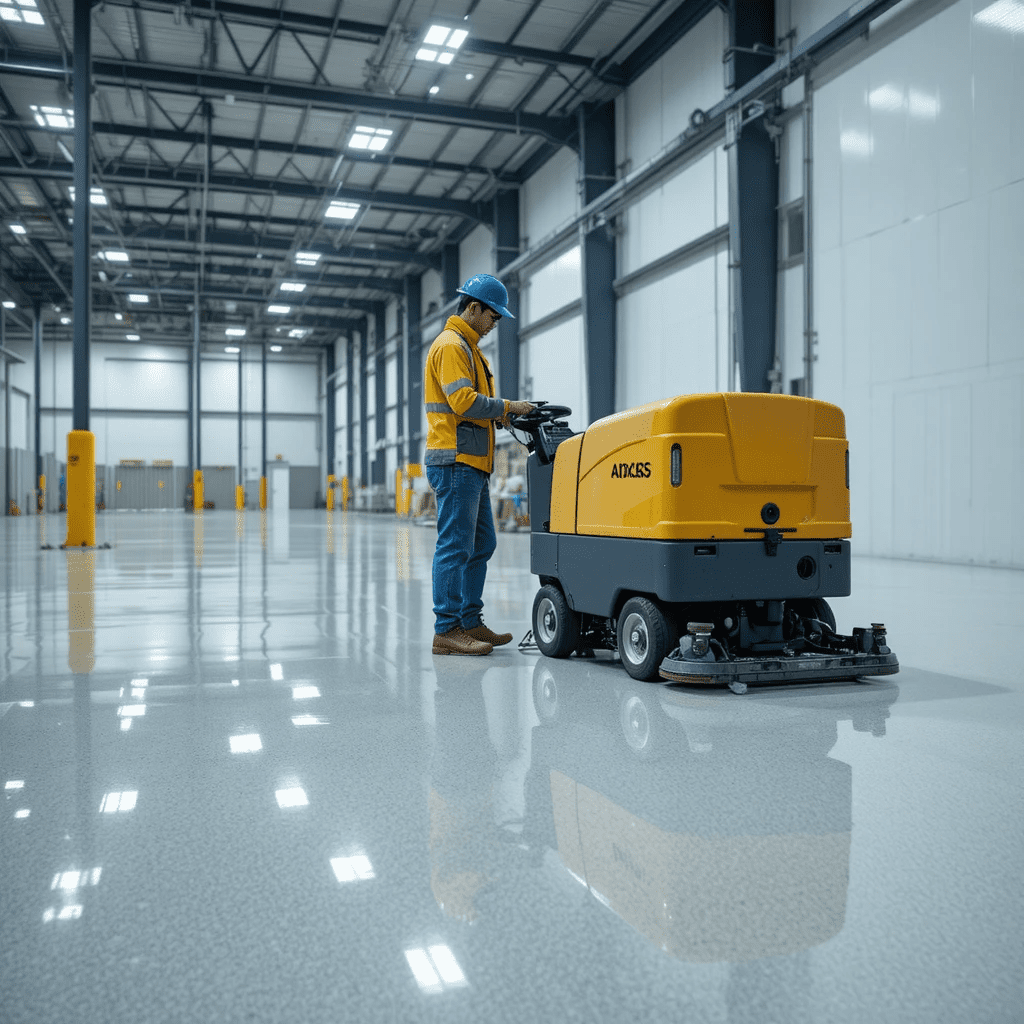
Wet cleaning is equally important for removing stains and sticky residues. Using a mild, non-acidic cleaner diluted in warm water helps lift dirt without harming the epoxy surface. Harsh chemicals, abrasive pads, and soap-based cleaners should be avoided because they can leave a film or dull the glossy finish. A soft mop or an automatic scrubber with gentle pads provides thorough cleaning without damaging the protective layer.
Immediate spill response is another essential practice. Oil, grease, chemicals, and colored liquids can stain the surface if left unattended. Promptly wiping spills with a soft cloth or mop prevents absorption and minimizes the risk of discoloration. In industrial environments where spills are common, keeping absorbent materials readily available helps maintain the integrity of the flooring.
Routine inspections during cleaning allow maintenance staff to identify minor issues before they worsen. Small scratches, scuff marks, or early signs of wear can often be addressed quickly, preventing them from spreading across larger areas.
Preventative Measures That Minimize Surface Damage
Beyond regular cleaning, preventative strategies play a major role in preserving epoxy flooring. Many forms of damage result from friction, impact, and pressure that could be reduced with simple protective measures.
Heavy equipment and machinery should be fitted with protective pads or rubber wheels to reduce stress on the surface. Hard plastic or metal wheels can leave marks or cause premature wear, especially when equipment is frequently moved. Using floor mats beneath stationary machinery also distributes weight more evenly and protects high-pressure areas.
Entrance mats are particularly valuable for reducing debris carried into the facility. By trapping dirt and moisture at entry points, these mats prevent abrasive particles from spreading across the floor. This simple addition significantly reduces the daily wear caused by foot traffic.
Dragging heavy objects directly across the surface should always be avoided. Instead, lifting equipment or using wheeled platforms minimizes friction and protects the commercial epoxy floor coating from scratches and gouges. Training staff to follow proper handling procedures contributes to long-term surface preservation.
Temperature management is another important factor. Extreme heat can soften certain epoxy coatings, making them more vulnerable to impressions from heavy loads. Maintaining stable indoor temperatures helps preserve structural integrity and reduces stress on the flooring system.
In areas exposed to sunlight, installing window coverings or UV-resistant coatings can minimize discoloration. While not all epoxy systems are vulnerable to UV damage, protective measures help maintain consistent appearance over time.
Addressing Minor Repairs Before They Become Major Problems
Even with diligent care, minor imperfections may eventually appear. Addressing small cracks, chips, or worn patches early prevents further deterioration and extends the life of the flooring system.
Surface scratches can often be buffed out or recoated to restore the original finish. Applying a thin maintenance coat refreshes the glossy appearance while adding an extra layer of protection. This process is far more cost-effective than replacing large sections of flooring.
For small chips or localized damage, epoxy patching compounds provide seamless repairs. These materials bond securely with the existing surface, preventing moisture penetration and restoring structural continuity. Quick repairs also maintain workplace safety by eliminating uneven areas that could pose tripping hazards.
Regular professional inspections can identify hidden issues that may not be visible during routine cleaning. Experienced technicians can assess adhesion strength, detect moisture-related concerns, and recommend appropriate restoration techniques.
By resolving minor damage promptly, facility owners prevent small flaws from expanding into extensive repairs that disrupt operations and increase maintenance expenses.
Long-Term Maintenance Planning for Maximum Durability
A structured maintenance plan ensures that epoxy flooring continues to perform reliably in demanding environments. Instead of relying solely on reactive cleaning, scheduled care helps preserve both function and appearance.
Periodic deep cleaning removes embedded dirt that daily maintenance may miss. Mechanical scrubbers with non-abrasive pads can thoroughly cleanse the surface without causing harm. This process restores brightness and improves slip resistance.
Reapplying protective topcoats every few years provides an additional barrier against wear. These coatings refresh the surface and enhance resistance to scratches, chemicals, and moisture. The frequency of recoating depends on traffic volume and operational demands, but proactive renewal significantly extends flooring lifespan.
Documenting maintenance schedules allows facility managers to track cleaning frequency, repair history, and inspection results. Organized records support informed decisions about future care and budget planning.
Staff training also contributes to durability. When employees understand proper cleaning methods and equipment handling procedures, they help protect the flooring through everyday actions. Awareness reduces accidental damage and encourages prompt reporting of potential issues.
Investing in preventative care ultimately reduces operational downtime and long-term costs. A properly maintained commercial epoxy floor coating can serve facilities for decades while retaining its professional appearance and protective qualities.
Epoxy flooring represents a significant investment in safety, durability, and aesthetics. With consistent cleaning, preventative strategies, timely repairs, and structured long-term planning, facility owners can preserve their commercial epoxy floor coating and ensure it continues to withstand heavy use. Proper maintenance not only enhances longevity but also maintains the polished, professional environment that businesses rely on to make strong impressions and support efficient operations.
If you want to know about Flat Roof Replacement Cost: Complete Guide to Pricing, Materials, Labor, and Lifespan for Every Roofing Type then visit our Home Improvement category.


