Mark Sanchez Net Worth in 2026: NFL Earnings, Contracts, Career Income, Salary, Endorsements and How He Built His Wealth

0

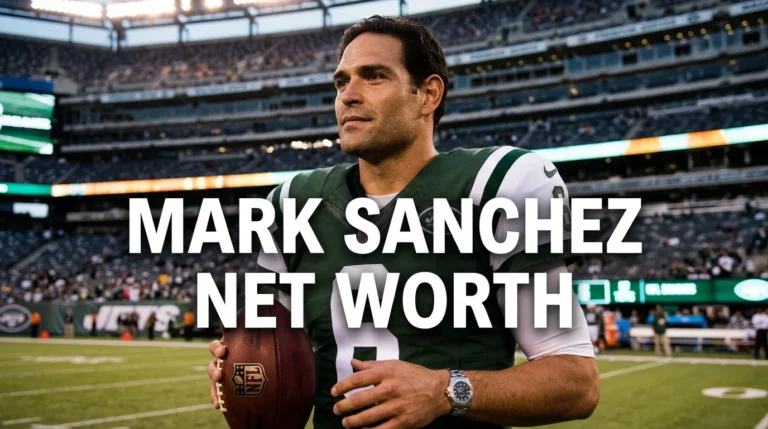
Mark Sanchez net worth is estimated at about $25 million in 2026, according to the current Celebrity Net Worth estimate. That figure is not an audited financial statement, so it should be treated as an estimate. His documented NFL earnings provide a stronger foundation for understanding how he built his wealth.

Sanchez earned roughly $66.3 million during his NFL career, according to contract data from Over the Cap. He later moved into television after retiring from professional football in 2019. His career shows why lifetime earnings and personal net worth can differ substantially.

Key factDetails
Full nameMark Travis John Sanchez
BornNovember 11, 1986
BirthplaceLong Beach, California
ProfessionFormer NFL quarterback and sports analyst
Estimated net worthAbout $25 million
Documented NFL career earnings$66,297,941
NFL draftNo. 5 overall in 2009
CollegeUSC
NFL experience10 seasons
Retirement2019
Major teamsJets, Eagles, Cowboys, Washington
Former broadcasting networksESPN/ABC and Fox Sports

Direct answer: Mark Sanchez is estimated to be worth about $25 million in 2026. His wealth was built mainly through NFL contracts, followed by television work. Over the Cap records approximately $66.3 million in career NFL earnings, although career earnings should not be confused with current personal wealth.

What Is Mark Sanchez Net Worth in 2026?

The current widely published estimate places his fortune at approximately $25 million. Celebrity Net Worth lists that amount, but private financial records are not publicly available. Taxes, investments, spending, debts, property, and professional fees can all affect the real number.

Readers may encounter older articles claiming that his fortune is closer to $40 million. Those reports should be viewed cautiously because the cited wealth source currently lists $25 million. A current estimate is more useful than repeating an older figure without explaining the discrepancy.

This distinction matters with celebrity wealth reporting. A public estimate can provide context, but it cannot show an individual’s complete balance sheet. The more verifiable part of Sanchez’s financial story comes from his NFL contracts.

How Much Did Sanchez Earn in the NFL?

Over the Cap calculates his NFL career earnings at $66,297,941. It also records approximately $38.75 million in total guarantees across his contracts. His largest single-year cash payment was about $16.46 million in 2010.

Most of that money came during his years with the New York Jets. Over the Cap credits him with $54.225 million in earnings from the franchise. His later stops added smaller but still significant amounts to his career total.

NFL teamRecorded earnings
New York Jets$54,225,000
Philadelphia Eagles$6,750,000
Dallas Cowboys$2,000,000
Chicago Bears$2,000,000
Denver Broncos$1,000,000
Washington$322,941
Approximate career total$66,297,941

These figures explain why a multimillion-dollar fortune is financially plausible. They do not prove how much money remains today. Gross football earnings are reduced by taxes, representation costs, living expenses, investments, and other financial commitments.

His Rookie Contract Created the Financial Foundation

The New York Jets selected Sanchez with the fifth overall pick in the 2009 NFL Draft. The team traded up to acquire the selection after his college career at USC. His high draft position immediately placed him among that year’s most valuable rookies.

NFL reporting at the time described his rookie agreement as worth around $50 million. Incentives could have pushed its value as high as $60 million. The deal also included about $28 million in guarantees, according to the NFL’s contemporary report.

That contract arrived before the NFL’s current rookie wage structure reshaped first-round deals. Sanchez therefore entered professional football with substantial earning power from the beginning. His early playoff success also helped establish him as a recognizable national sports figure.

The Jets Extension Added Millions More

New York extended its quarterback in 2012 after his first three NFL seasons. The three-year extension was valued at approximately $40.5 million. Contemporary NFL reporting said the arrangement included $20.5 million fully guaranteed.

The headline contract value did not mean he eventually collected every possible dollar. Over the Cap records $20.5 million earned against the extension itself. That difference demonstrates why contract values and actual career earnings should be separated.

His Jets years remained the central financial period of his playing career. Later contracts were considerably smaller as he moved into veteran and backup roles. Still, those deals added several million dollars to his cumulative football income.

Career Success Helped Drive His Earning Power

Career Success Helped Drive His Earning Power

Sanchez finished his NFL career with 15,357 passing yards and 86 passing touchdowns. He appeared in 79 regular-season games and made 73 starts. His most memorable stretch came early with the Jets, who reached consecutive AFC Championship Games.

His college résumé also helped create his professional value. At USC, he led the Trojans to a Rose Bowl victory and earned the game’s Offensive MVP honor. He then entered the 2009 draft rather than returning for another college season.

Football fans interested in another USC quarterback can read Digestley’s Caleb Williams profile. Readers interested in the business side of the NFL can also explore Digestley’s David Tepper net-worth profile.

How Broadcasting Added a Second Career

Sanchez officially retired from the NFL in July 2019. ESPN announced that he would immediately join the network as a college football analyst. His work included studio programming and appearances across ESPN platforms.

Fox Sports hired him as an NFL game analyst in 2021. The move extended his earning career beyond football and kept him visible to a national audience. Broadcasting became an important second professional chapter after his playing days ended.

Fox confirmed in November 2025 that he was no longer with the network. Former quarterback Drew Brees subsequently joined Fox’s NFL coverage. That change means older descriptions calling Sanchez a current Fox analyst are no longer accurate.

A 2026 Update on His Career Status

His public circumstances changed significantly after an October 2025 altercation in Indianapolis. Prosecutors filed criminal charges following the incident, while another person involved also filed a civil lawsuit. Sanchez was no longer working for Fox by the following month.

In September 2026, court records showed that he planned to plead guilty rather than proceed with a jury trial. Reports said the filing requested a later plea and sentencing hearing. The available records did not initially specify which charges would be included in the planned plea.

These developments should not be converted into unsupported claims about his personal finances. Public reporting does not establish their precise effect on his assets or current wealth. A responsible estimate should therefore remain tied to available financial evidence.

Net Worth Is Not the Same as Career Earnings

The difference between $66.3 million in NFL earnings and an estimated $25 million fortune is not unusual. Career earnings measure gross compensation received across years of work. Net worth attempts to measure assets minus liabilities at a particular point in time.

Professional athletes can face federal and state taxes, agent fees, management costs, and substantial living expenses. Investment gains or losses can also change wealth long after a playing career ends. Private business holdings and property can make outside estimates even harder to verify.

This is why the documented contract total is more concrete than any celebrity wealth estimate. The $66.3 million figure comes from detailed contract records. The $25 million figure remains a third-party estimate rather than a disclosed financial statement.

For another example of how public wealth estimates require context, see Digestley’s Snoop Dogg net-worth analysis. Digestley also explains the same distinction in its Brian Austin Green profile.

Where Did His Money Come From?

His known or reported income history can be divided into several categories:

  • NFL salaries and bonuses: The clearest source, totaling roughly $66.3 million in recorded career earnings.
  • Guaranteed contract money: Over the Cap records about $38.75 million in total guarantees.
  • Broadcasting: He worked for ESPN and later Fox Sports after retiring.
  • Public-facing opportunities: His profile as an NFL quarterback created additional commercial opportunities during his career.
  • Investments or private assets: These may affect his wealth, but reliable public details remain limited.

The first three categories have strong public documentation. The final categories are harder to value without financial disclosures. Claims about private investments or endorsement totals should therefore avoid unsupported dollar amounts.

Why the $25 Million Estimate Makes Sense, but Isn’t Confirmed

A $25 million estimate is possible when compared with more than $66 million in documented football earnings. Sanchez also earned money through several years of sports broadcasting. Yet gross income should never be treated as money sitting in a bank account.

Taxes alone can consume a substantial share of high professional earnings. Athletes also pay agents and other advisers while maintaining career-related expenses. Personal spending, investments, real estate, and liabilities can move the final figure in either direction.

The safest conclusion is therefore straightforward. Public evidence supports tens of millions in lifetime professional earnings. His exact present wealth remains private, while the current published estimate is approximately $25 million.

Frequently Asked Questions

What is Mark Sanchez net worth in 2026?

His net worth is currently estimated at about $25 million by Celebrity Net Worth. The figure is an outside estimate rather than an audited disclosure. His exact assets and liabilities have not been made public.

How much money did Sanchez make in the NFL?

Over the Cap records approximately $66.3 million in career NFL earnings. More than $54 million of that total came from his time with the Jets. His remaining earnings came from later contracts with several NFL teams.

What was his biggest NFL contract?

His rookie agreement was reported around the $50 million mark and could reach $60 million with incentives. The Jets later gave him a three-year extension worth roughly $40.5 million. Actual earnings differed from the maximum advertised values of those contracts.

When did Sanchez retire from football?

He retired from the NFL in July 2019 after a 10-year professional career. He then joined ESPN as a college football analyst. That transition allowed him to continue earning through sports media.

Is Sanchez still working for Fox Sports?

No. Fox confirmed in November 2025 that he was no longer with the network. He had joined Fox Sports as an NFL game analyst in 2021.

The Bottom Line

Sanchez built most of his documented wealth through professional football, especially his lucrative years with the New York Jets. His NFL contracts produced approximately $66.3 million in recorded career earnings. Broadcasting provided another income stream after his retirement.

The current $25 million wealth estimate offers a useful reference point, but it remains an estimate. No public financial filing confirms his precise assets, debts, investments, or cash holdings. Readers should distinguish that estimate from the much better documented NFL earnings figure.

For more athlete profiles, career stories, and financial explainers, explore Digestley’s sports coverage.

How Many Toes Does A Dog Have?: A Complete Guide to Paw Anatomy, Dewclaws, Toe Counts, Breed Variations & Paw Care

0

The question “how many toes does a dog have?” has a simple answer for most pets: 18. Most dogs have five toes on each front paw and four on each rear paw. The difference comes from the dewclaws found on the front legs.

Quick answer: Most dogs have 18 toes in total. Each front paw usually has five toes, including one dewclaw. Each rear paw usually has four toes. Some breeds have rear or double dewclaws, so their total can be higher. A dog may also have fewer toes after dewclaw removal.

Paw locationTypical toe countWhat you usually see
Front left paw5Four weight-bearing toes plus one dewclaw
Front right paw5Four weight-bearing toes plus one dewclaw
Rear left paw4Four weight-bearing toes
Rear right paw4Four weight-bearing toes
Typical total18Ten front toes and eight rear toes

Key takeaways

  • Most dogs have 18 toes.
  • Front paws usually have five toes each.
  • Rear paws usually have four toes each.
  • A dewclaw counts as a digit even though it sits higher on the leg.
  • Some breeds naturally have rear or double dewclaws.
  • An unusual toe count is not automatically a health problem.

How Many Toes Does a Dog Have on Each Paw?

A typical front paw has four toes that contact the ground during normal standing. It also has a fifth digit called the dewclaw. That gives most dogs five digits on each front leg.

Rear paws normally have four toes that contact the ground. Many dogs do not have rear dewclaws, which explains the smaller count. Two front paws provide ten toes, while two rear paws provide eight.

The resulting total is 18 toes for a typical dog. This number can change because of genetics, breed traits, or prior dewclaw removal. Counting your own pet is the easiest way to confirm its exact number.

What Is a Dewclaw, and Does It Count as a Toe?

A dewclaw is the higher digit located on the inner side of a dog’s leg. Front dewclaws are usually attached by bone and ligaments. They are more than loose nails attached to the skin.

Because a dewclaw is a digit, it counts when discussing a dog’s total toes. It resembles a thumb more closely than the four main front digits. It normally sits above the surface while a dog stands or walks.

Front dewclaws can also have practical uses. Dogs may use them for gripping objects or gaining stability during fast movement. The American Kennel Club also notes their role in traction and balance.

Owners should include dewclaws during routine nail checks. They often receive less natural wear because they rarely touch the ground. Long dewclaw nails can snag, split, or become uncomfortable.

Why Do Some Dogs Have More Than 18 Toes?

Breed genetics can produce additional digits on the rear legs. These extra digits are usually rear dewclaws, and some dogs have two per leg. Having extra digits is often described as polydactyly.

The Great Pyrenees, Briard, Beauceron, and Icelandic Sheepdogs are known for rear dewclaw traits. Some breed standards even expect double rear dewclaws. Therefore, a higher count can be completely normal for that breed.

Double dewclaws can change the total quickly.

A dog with one additional rear dewclaw on each leg may have 20 toes. Double rear dewclaws can raise the count further. The exact total depends on how many extra digits are present.

Some unusual breeds have even more dramatic paw anatomy. The Norwegian Lundehund is known for having at least six toes on each foot. That can produce 24 toes across four paws.

An extra toe does not automatically indicate a defect. Its significance depends on breed, attachment, condition, and whether it causes problems. A veterinarian can examine any digit that appears painful or unusually loose.

Can a Dog Have Fewer Than 18 Toes?

Yes, a dog may have fewer than the typical total. Some puppies have dewclaws removed, while individual dogs may naturally lack certain rear digits. Previous trauma or surgery can also change the visible count.

A missing front dewclaw does not mean the remaining paw is abnormal. What matters most is whether the animal moves comfortably and has healthy feet. Old surgical scars can sometimes explain why a dewclaw is absent.

If you recently adopted a dog, its history may be unknown. Ask your veterinarian during the next routine examination if anything looks unusual. A professional can distinguish normal variation from previous injury.

How to Count Your Dog’s Toes at Home

You can check the count without complicated equipment. Choose a calm time when your pet is comfortable with paw handling. Stop if your dog appears frightened, painful, or defensive.

  1. Start with one front paw and locate the four main toes.
  2. Look higher along the inner side for the dewclaw.
  3. Repeat the process on the second front leg.
  4. Count the four main digits on each rear paw.
  5. Check both rear legs for single or double dewclaws.
  6. Add every true digit together for the final count.

Gentle paw handling can also reveal nail problems before they worsen. Check for redness, swelling, cracks, bleeding, or trapped debris. Frequent paw licking may deserve closer attention too.

Digestley’s guide to why dogs lick people and themselves covers common licking behaviors and warning signs. Persistent paw licking can sometimes accompany irritation or discomfort. A veterinarian should evaluate licking that becomes sudden or excessive.

Toe, Claw, and Paw Pad: What Is the Difference?

A toe is the complete digit containing bones, joints, soft tissues, and a nail. The claw is only the hard nail structure growing from that digit. The paw pad is the cushioned surface beneath the foot.

StructureWhat it isMain role
Toe or digitA complete anatomical digitSupports movement and positioning
Claw or nailKeratin structure at the digit’s endGrip, digging, and traction
Digital padPad beneath an individual toeCushioning and protection
Main paw padLarger central padWeight support and shock absorption
DewclawHigher first digitGrip and added stability in some movements

Understanding these terms makes home paw checks easier. It also helps you describe injuries accurately to a veterinarian. Saying which structure is affected can provide useful information during a phone call.

When Should an Extra Toe or Dewclaw Concern You?

Most extra digits need no special treatment when they are healthy. Problems arise when a nail snags, breaks, grows into nearby tissue, or becomes infected. Loose rear dewclaws may need particular attention because they can catch on objects.

Contact your veterinarian if you see persistent bleeding, swelling, discharge, limping, or obvious pain. A torn nail can expose sensitive tissue and may require professional treatment. Do not pull a damaged claw off at home.

Regular nail maintenance reduces preventable problems. Dewclaws deserve special attention because pavement does not usually wear them down. Your veterinarian or groomer can show you safe trimming techniques.

After outdoor activity, briefly inspect every paw before your dog settles indoors. Digestley’s advice on choosing and using a secure dog leash can also support safer walks. Good walking equipment helps you maintain control around rough terrain.

How to Keep Your Dog’s Paws Healthy

Check the feet regularly instead of waiting for obvious limping. Look between the toes and around every nail for irritation or trapped material. Small problems are easier to address before they become painful.

Keep nails at a practical length based on your veterinarian’s guidance. Remember the dewclaws during every nail-care session. They may need trimming even when the ground-contacting nails look acceptable.

Bath products can also affect the skin around the feet. Digestley’s article about using human shampoo on dogs explains why canine products are usually the safer routine choice. Rinse paws thoroughly after shampoos or cleaning products contact them.

Outdoor surfaces deserve attention during hot or harsh weather. Inspect paws after long walks, rough trails, or extended play. Digestley’s guide to artificial turf for dog owners also discusses pet-focused outdoor surfaces.

Frequently Asked Questions About Dog Toes

How many toes does a dog have?

Most dogs have 18 toes when the front dewclaws are included. That means five on each front paw and four on each rear paw. Breed differences and additional dewclaws can increase that number.

Do all dogs have dewclaws?

Most dogs are born with front dewclaws, but rear dewclaws vary. Certain breeds commonly have one or two rear dewclaws. Individual anatomy and previous removal can also affect what you see.

Do dewclaws touch the ground?

They usually do not touch the ground during ordinary standing. They can contact surfaces during running, turning, or climbing in some dogs. That contact can provide additional stability and traction.

Which dogs can have extra toes?

Several breeds are associated with rear or double dewclaws. Examples include Great Pyrenees dogs, Briards, Beaucerons, and Icelandic Sheepdogs. Breed standards can treat these additional digits as normal or desirable traits.

Should dewclaws be removed?

Removal is not automatically necessary for every dog. Front dewclaws can have useful functions, while individual rear dewclaws differ in attachment and condition. Discuss removal with a veterinarian rather than making the decision from appearance alone.

The Simple Way to Remember Your Dog’s Toe Count

For most dogs, remember five in front and four in back. Two front paws provide ten digits, while two rear paws provide eight. That creates the familiar total of 18.

Extra rear dewclaws explain why some healthy dogs have more. Previous removal or individual variation can explain a lower count. The number matters less than keeping every remaining digit healthy and comfortable.

Make paw inspection part of normal grooming and post-walk care. Check each claw, pad, and dewclaw while your dog is relaxed. Contact your veterinarian when you notice pain, swelling, bleeding, or a sudden change.

Why Cloud ERP Adoption Needs More Than An Implementation Plan

0

Cloud ERP programs can reach configuration completion while the business is still operating on assumptions inherited from the old ERP. Process owners may have approved workshop outcomes without agreeing on how exceptions will be handled. Data may be loaded without clear ownership for maintaining it. Users may have completed training without proving they can execute period-end, procurement, production, or service activities under real operating conditions.

This is the gap traditional implementation plans struggle to show. They are designed to control delivery: scope, configuration, integrations, testing, cutover, and go-live. Cloud ERP adoption requires a second control system—one that measures whether the organization can actually work differently once the project team begins to step away.

An effective adoption model should treat process standardization, data discipline, user capability, change governance, and run-phase ownership as conditions for operational acceptance rather than activities that simply need completion dates.

An Implementation Plan Can Show Progress Without Proving Adoption

SAP Activate provides a structured implementation methodology for SAP S/4HANA Cloud Public Edition, covering phases, deliverables, fit-to-standard analysis, testing, and deployment activities. SAP Cloud ALM supports project planning, task management, testing, milestones, and implementation tracking.

Those controls help determine whether the project is completing the work it committed to perform. They do not fully answer whether the business has absorbed the new operating model.

That distinction matters in cloud ERP because the target environment is intentionally more standardized and operates within an ongoing release lifecycle. For SAP S/4HANA Cloud Public Edition, SAP currently delivers two major upgrades each year, in February and August, with smaller non-disruptive features becoming available between releases.

A company that treats go-live as the end of change creates an operating mismatch from day one. Cloud ERP adoption must include the organization’s ability to accept standard processes, govern extensions, respond to product changes, maintain data quality, and manage new functionality after implementation.

The implementation plan gets the system into production. The adoption model determines whether the business is ready to operate it as a cloud service.

Process Standardization Requires Decision Rights, Not Just Workshop Attendance

Fit-to-standard is central to SAP S/4HANA Cloud Public Edition implementations. SAP describes the Explore phase as the stage where standard processes are reviewed in the starter system, requirements are validated against those processes, gaps are examined, and configuration decisions are documented.

The weak point is rarely the workshop itself. The real challenge is what happens when the standard process conflicts with a local preference.

A process owner may agree that the SAP standard works in principle while a business unit still expects its familiar approval path. Finance may support a single global process while a country team expects a local exception. Operations may accept a standardized flow until it changes responsibilities between functions.

A serious ERP adoption model therefore needs a process acceptance test. For every material process, the organization should know:

  • which SAP standard process has been selected;
  • which local variations remain and why;
  • who has authority to approve an exception;
  • whether the exception requires configuration, an extension, or an operating procedure; and
  • which controls will confirm that the process works after go-live.

This approach also supports clean core governance. SAP’s clean core guidance emphasizes standard processes, upgrade-stable extensions, integration discipline, and data quality rather than uncontrolled modifications within the ERP core.

If settled design decisions can be reopened whenever a local team objects, standardization will gradually erode after go-live.

Data Readiness Must Include Post-Migration Ownership

Data work is often judged by migration milestones: extraction complete, cleansing complete, mock load complete, and reconciliation passed.

Those checks establish whether data can enter the new system correctly. Cloud ERP adoption requires another question: who will keep that data usable after the migration team is gone?

Cloud ERP operating discipline depends on stable ownership of customers, suppliers, materials, chart-of-account structures, organizational data, planning parameters, and other master data relevant to the selected scope. Weak ownership after go-live can reintroduce duplicate records, inconsistent attributes, incomplete information, and manual workarounds even when the original migration was technically successful.

An adoption model should therefore assign business ownership for critical data domains before production use. Data owners need to understand which fields are mandatory, who can create or change records, what validation is required, how exceptions are handled, and how quality problems will be detected.

This is particularly important during SAP cloud ERP transformation because data decisions frequently expose deeper operating decisions. Harmonizing supplier records may require agreement on purchasing practices. Changing organizational structures can alter reporting responsibilities. Standardizing material attributes can affect planning and fulfillment.

Treating these issues purely as migration tasks hides their wider business impact.

User Enablement Should Prove Real-World Role Execution

Training completion is easy to report, but it is a weak measure of adoption.

A user can attend training, pass a knowledge check, and still be unprepared for the conditions that arise during a financial close, production exception, urgent purchase, return, credit block, or failed integration.

For each critical business role, the program should identify the decisions the user must make, the SAP Fiori apps or workflows involved, the exceptions they may encounter, the approvals they own, and the support route available when something fails. User acceptance testing can then evaluate operational competence alongside functional correctness.

This shifts cloud ERP adoption from a communications workstream into an operating capability.

It also exposes situations where process design and authorization design are misaligned. If a user understands the process but lacks the required business role, the problem lies in access design. If the user has the necessary access but cannot determine how to handle an exception, the issue may lie in process ownership, training, or workflow design.

GROW with SAP Readiness Must Assess Organizational Fit

SAP currently positions SAP GROW as its entry point to cloud ERP, built on SAP S/4HANA Cloud Public Edition—an offering that GROW with SAP specialists can help organizations assess for organizational and process fit before implementation begins.

That makes GROW with SAP readiness partly an organizational question.

A company can be technically suitable for SAP S/4HANA Cloud Public Edition while still carrying operating habits that make adoption difficult. Extensive local process variation, unclear process ownership, weak master-data governance, or a culture of resolving requirements through custom development can create friction with a more standardized SaaS ERP model.

Where a requirement is genuinely differentiating, an extension may be justified. Where it exists primarily because “we have always done it this way,” the burden of proof should be higher. Clean core guidance is relevant because cloud ERP requires ongoing discipline around extensions and integrations rather than a one-time cleanup exercise.

Business owners must also be able to make fit-to-standard decisions at the pace required by the implementation. A technically straightforward scope can still stall when ownership is fragmented or every deviation requires repeated escalation.

This is an important part of GROW with SAP readiness because a preconfigured solution still requires business decisions. Standard content reduces design effort only when the organization is prepared to adopt the operating choices behind it.

Change Governance Must Continue After Go-Live

Many ERP programs apply strong change control during implementation but much weaker governance once the system moves into business-as-usual operations.

SAP S/4HANA Cloud Public Edition follows an ongoing update and upgrade cycle. SAP provides What’s New information and tools such as Release Assessment and Scope Dependency to help customers understand changes relevant to their activated and used scope.

The implication for cloud ERP adoption is straightforward: organizations need a repeatable process for evaluating product changes after the initial implementation.

That operating cadence should answer several questions:

  • Which release changes affect active business processes?
  • Which changes require regression testing?
  • Which new capabilities should be adopted now, deferred, or rejected?
  • Which business owner is responsible for making that decision?
  • Do authorization roles, integrations, procedures, or training need to be updated?

Without this governance, an organization can remain technically current while its business usage falls behind the capabilities available in the system.

Cloud ERP therefore changes the duration of adoption. Adoption continues through subsequent releases because the application itself continues to evolve.

Run-Phase Ownership Should Be Defined Before Cutover

One of the strongest indicators of adoption readiness is whether the organization knows who owns the system after go-live.

Implementation programs create temporary clarity. There is a project manager, workstream leads, consultants, architects, testers, and a cutover structure. Production operations require permanent ownership.

Before cutover, the ERP adoption model should define responsibility for process changes, master data, integrations, authorization issues, monitoring, incidents, enhancements, release assessment, regression testing, and user support.

SAP Cloud ALM illustrates why this distinction matters. Its implementation capabilities support project execution and testing, while its operations capabilities include business process monitoring, integration and exception monitoring, job and automation monitoring, health monitoring, and real user monitoring for supported scenarios.

Moving into production therefore changes the type of governance required. The central question shifts from whether a process was implemented to who will detect and resolve degradation in that process.

That ownership belongs in SAP cloud ERP transformation planning before go-live because support structures created after cutover often inherit whatever gaps the project leaves behind.

Five Operational Acceptance Gates For Cloud ERP Adoption

An adoption model does not need to become another large methodology. It needs a small number of operational gates that require evidence before the program declares the organization ready.

A practical model can use five acceptance gates.

1. Process Acceptance

Target processes are approved, material exceptions are governed, and process owners understand their responsibilities after go-live.

The goal is not merely to confirm that processes have been designed. It is to demonstrate that the organization has accepted how those processes will operate and who has authority when exceptions arise.

2. Data Acceptance

Critical data is reconciled, stewardship is assigned, and controls exist to maintain data quality after migration.

Successful loading is only the starting point. The business must also be capable of maintaining reliable master and transactional data after the implementation team exits.

3. Role Acceptance

Users can complete critical tasks and handle relevant exceptions using the correct access, workflow, and support path.

This provides stronger evidence of readiness than training attendance alone because it tests whether users can actually perform their responsibilities under realistic operating conditions.

4. Change Acceptance

Release, extension, integration, and configuration decisions have defined governance after production begins.

The organization needs clear ownership for evaluating SAP releases, deciding which capabilities to adopt, managing extensions, and determining when testing or training updates are required.

5. Run Acceptance

Monitoring, incident ownership, support, regression testing, and continuous improvement responsibilities have transferred to named operational teams.

This confirms that responsibility has moved from the temporary project organization to the permanent teams expected to operate and improve the ERP environment.

Each gate should require evidence. A green status should mean that ownership and operating behavior have been demonstrated—not simply that a task has been marked complete.

That distinction gives cloud ERP adoption a practical and measurable definition.

Go-Live Should Mark The Transfer Of Ownership

Implementation plans remain essential. They control dependencies, delivery activities, technical quality, testing, and cutover.

Their limitation is scope.

A project plan is designed around getting a defined solution into production. An adoption model is designed around ensuring that the organization can use, govern, maintain, and improve that solution under normal business conditions.

The implementation plan should answer whether the system will be ready. The adoption model should answer whether processes, data, users, governance structures, and operational teams are ready to take responsibility for it.

When those two views are managed together, cloud ERP adoption becomes part of program governance before go-live and part of operational governance afterward.

Project completion then represents more than a technical milestone. It becomes a controlled transfer of ownership, with the business prepared to operate the ERP under the conditions that cloud delivery actually creates.

Do Rottweilers Shed? What U.S. Owners Should Expect From Their Double Coat

0

If you are asking, “Do Rottweilers shed?” the answer is yes. Their short coat sheds year-round, with heavier seasonal losses in spring and fall. Regular brushing keeps the fur manageable, but no routine can stop normal shedding completely. A Rottweiler sheds year-round and usually loses more coat in spring and fall.

Weekly brushing often handles normal periods, while seasonal shedding may need more frequent grooming. The breed is not hypoallergenic, and sudden bald patches, severe itching, or coat changes deserve veterinary attention.

Rottweiler Shedding at a Glance

Do Rottweilers ShedWhat to expect
Shedding levelModerate to noticeable year-round
Heaviest periodsUsually spring and fall
Coat typeStraight, coarse outer coat with an undercoat
Normal brushingAbout once weekly
Heavy-shed brushingSeveral times weekly, depending on the dog
HypoallergenicNo
Can shedding stop completely?No, but grooming controls loose hair
Vet warning signsBald patches, redness, itching, sores, or sudden coat changes

Key Takeaways

  • Short hair does not mean a low-shedding coat.
  • Spring and fall usually bring the largest increase in loose fur.
  • Weekly brushing is a sensible baseline for most healthy dogs.
  • More frequent brushing can help during seasonal coat changes.
  • Excessive hair loss with skin changes may require veterinary care.
  • Shaving is not a practical solution for routine shedding.

Do Rottweilers Shed a Lot?

The American Kennel Club describes the breed as a moderate shedder. It also notes heavier shedding during spring and fall. That makes routine coat care important even though the hair stays short. Veterinary sources sometimes describe the amount more strongly. PetMD says the coat can shed heavily year-round and may need frequent brushing. The practical takeaway is simple: owners should expect to see hair around the home.

Individual dogs will not shed identical amounts. Climate, indoor living, health, grooming, and coat density can affect what you notice. A short-haired dog can still leave plenty of black fur on furniture.

Why a Rottweiler’s Short Coat Still Sheds

The breed standard describes a straight, coarse, dense outer coat that lies flat. An undercoat appears around the neck and thighs, and its amount varies with climate. These layers help explain why such short hair can shed noticeably. Undercoat hairs turn over faster than many outer hairs. They can loosen substantially during seasonal coat changes. That process creates the familiar increase in loose fur during spring and fall.

Short hairs can also be harder to notice until they collect. They work into carpets, fabric seats, blankets, and clothing instead of forming large fluffy clumps. A dark coat makes those hairs especially visible on pale fabrics.

When Is Rottweiler Shedding Season?

Spring and fall are the two periods when owners commonly notice the biggest increase. The AKC specifically identifies those seasons as heavier shedding periods. The dog is replacing its coat as seasonal conditions change. Indoor living can make the pattern less dramatic for some dogs. Heating, air conditioning, and artificial lighting create a more stable home environment. You may therefore notice steady shedding between the larger seasonal peaks.

The exact timing also changes across the United States. A dog in Minnesota experiences different seasonal conditions from one living in southern Florida. Watch your own dog’s pattern instead of relying on a fixed calendar date.

How Much Hair Should You Expect Around the House?

Normal shedding usually means scattered short hairs on surfaces your dog frequently uses. Bedding, sofas, vehicle seats, rugs, and clothing often collect the most. Spring or fall can noticeably increase how often those areas need cleaning. This breed is easier to groom than many long-coated dogs. That does not make it an ideal choice for someone wanting an almost hair-free home. Consistent brushing moves loose coat into the brush before much of it reaches your floors.

Your home setup can make cleanup easier too. Washable covers and easy-clean resting areas reduce the work loose hair creates. Digestley’s pet-friendly home guide offers practical room-by-room ideas for dog households.

A Simple Rottweiler Grooming Routine

Start with a thorough brushing about once each week during ordinary periods. Work gently in the direction the hair grows. Use the session to check the skin for redness, irritation, flakes, lumps, or unusual thinning. Increase brushing when loose fur starts appearing faster than usual. Some dogs may benefit from several short sessions each week during seasonal shedding. Gentle, regular work is usually better than aggressive grooming during one long session.

Useful grooming supplies can include the following.

  • A rubber grooming mitt or curry brush for loose surface hair.
  • A soft or medium bristle brush for routine coat care.
  • An appropriate undercoat tool for heavier seasonal shedding.
  • A dog-specific shampoo for occasional baths.
  • Washable towels for drying and collecting loose fur.

Bathing can loosen dead hair, but frequent washing won’t cure shedding. Use products intended for canine skin rather than routinely using human products. Digestley explains the difference in its guide to human shampoo and dog skin.

Can You Reduce Rottweiler Shedding?

You can reduce loose hair around the house, but you cannot eliminate normal shedding. Regular brushing removes hair before it lands on furniture. Routine cleaning then handles what grooming does not catch. A complete, appropriate diet also supports normal skin and coat condition. VCA notes that inadequate nutrition can contribute to dull coats and excessive hair loss. Discuss dietary changes or supplements with your veterinarian when you have health concerns.

Keep expectations realistic around deshedding products. A tool can remove loose undercoat, but excessive pressure can irritate skin or damage healthy hair. Choose equipment that suits your dog’s coat and use it gently.

Should You Shave the Coat to Stop Shedding?

Shaving is not a useful routine answer to seasonal hair around your home. The undercoat and outer coat perform different protective functions. Removing hair also doesn’t change the underlying growth cycle that causes shedding. Ask a veterinarian or professional groomer before making major coat changes. Medical treatment, severe matting, or another specific problem may require different handling.

Routine loose hair is better addressed through brushing and household cleaning. Clipping also does nothing to solve an underlying skin disorder. A dog losing abnormal amounts of hair needs an investigation into the cause. Covering the symptom can delay useful veterinary care.

When Is Shedding a Sign of a Health Problem?

Normal shedding should not leave obvious bald areas across an otherwise healthy coat. The Merck Veterinary Manual says shedding becomes more concerning when clear hair loss or bald spots develop. Itching, scaling, redness, or inflammation also deserve attention. Medical causes of abnormal hair loss can include infections, parasites, allergies, and hormonal conditions. Hypothyroidism can also produce coat dryness, excessive shedding, or delayed hair regrowth.

Diagnosis requires veterinary assessment rather than guessing from the coat alone. Watch for licking or chewing around thinning areas. Those behaviors may indicate irritation, pain, or another problem needing investigation. Digestley’s dog-licking and warning-sign guide explains when repetitive licking deserves closer attention.

Are Rottweilers Hypoallergenic?

Are Rottweilers Hypoallergenic?

No, this breed is not considered hypoallergenic. Shedding releases hair and can also spread dander through the home. PetMD likewise identifies the breed as unsuitable for people seeking a non-shedding dog. Dog allergies are not caused by hair alone. Allergens come from proteins found in sources such as dander and saliva. A shorter coat therefore does not guarantee fewer allergy symptoms.

Anyone with significant dog allergies should spend time around the breed before adopting. Discuss severe reactions with a medical professional. Grooming can reduce loose hair, but it cannot make a dog allergen-free.

Keeping Loose Fur Under Control in a U.S. Home

A simple schedule works better than waiting until hair becomes overwhelming. Brush on the same day each week, then increase frequency during obvious coat changes. Vacuum areas where your dog sleeps or relaxes before hair becomes embedded. Wash pet bedding regularly and keep a washable cover on favorite furniture. A rubber glove or reusable hair remover can lift short hairs from upholstery.

Cleaning a small amount frequently takes less effort than tackling several weeks of buildup. Grooming also fits into broader care for a large working breed. Daily activity and safe walking equipment remain important alongside coat maintenance. Digestley’s large-dog harness materials guide can help owners evaluate durable walking gear.

The Practical Takeaway

A short coat does not make this breed shed-free. Plan for weekly brushing, extra grooming during spring and fall, and regular household cleanup. Contact your veterinarian when shedding changes suddenly or appears alongside skin problems.

Frequently Asked Questions

Do Rottweilers shed all year?

Yes, they can lose hair year-round. Spring and fall usually bring a larger increase in loose coats. Indoor conditions may make the year-round pattern appear more consistent.

How often should I brush my Rottweiler?

Once weekly is a practical baseline for a healthy coat. You can brush more often when seasonal shedding becomes noticeable. Stop or adjust your technique if grooming causes redness or discomfort.

What is the best brush for a Rottweiler?

A rubber curry brush or grooming mitt works well for routine loose hair. A suitable undercoat tool can help during heavier seasonal shedding. Use every tool gently and follow its directions.

Why is my dog suddenly shedding much more?

A seasonal coat change may explain a temporary increase. Sudden shedding with bald spots, itching, redness, odor, or sores needs closer attention. A veterinarian can identify whether a medical problem is contributing.

Can better food stop shedding?

No diet can stop the normal replacement of old hair. Balanced nutrition supports healthy skin and a normal coat. Ask your veterinarian before adding supplements solely to reduce fur around the house.

Corbin Bernsen at 72: Inside His Enduring Career, Family Life, and Hollywood Comeback

0

Corbin Bernsen has spent decades proving that one defining television role does not have to define an entire career. American audiences may first remember him as the ambitious divorce attorney Arnie Becker on L.A. Law. Still, later generations know him as Roger Dorn in Major League, Henry Spencer on Psych, or from a long list of film and television appearances. Now 72, Bernsen remains professionally active while enjoying what he has described as a new stage of his creative life.

Corbin Bernsen is a 72-year-old American actor, director, producer, and writer best known for L.A. Law, Major League, and Psych. Born September 7, 1954, he has been married to actress Amanda Pays since 1988, has four sons, and continues appearing in major television projects in 2026.

Quick Facts at a Glance

FactDetails
Full nameCorbin Dean Bernsen
Date of birthSeptember 7, 1954
Age in September 202672
BirthplaceNorth Hollywood, California
ProfessionActor, director, producer, screenwriter
EducationUCLA; BA in theater and MFA in playwriting
Best-known TV rolesL.A. Law, Psych, The Resident
Famous movie roleRoger Dorn in the Major League films
WifeAmanda Pays
MarriedSince November 19, 1988
ChildrenFour sons
HeightAbout 5 feet 11 inches
Estimated net worthAbout $12 million, according to a third-party estimate
Recent workDuster, Your Friends & Neighbors, The Fall and Rise of Reggie Dinkins

Birth, education, marriage, height, and career details are consistently reported by Bernsen’s official biography and current entertainment databases. Net-worth figures vary between sources because celebrity finances are private, so treat the figure above as an estimate rather than a verified personal balance sheet.

Who is Corbin Bernsen? Early Life and Family Background

Early Life and Family Background

Corbin Bernsen was born into a family already connected to entertainment. His mother was Jeanne Cooper, the celebrated actress who played Katherine Chancellor for decades on The Young and the Restless, while his father, Harry Bernsen Jr., worked as a producer. Bernsen eventually studied theater at UCLA and earned an undergraduate degree, followed by an MFA in playwriting, giving him storytelling experience before his acting career reached national television.

His Hollywood background did not automatically produce overnight stardom. Like many working actors, he accumulated experience before landing the role that changed his career in the 1980s. Once L.A. Law arrived, however, Bernsen became one of the most recognizable faces on American prime-time television.

How L.A. Law Made Him Famous

Bernsen’s breakthrough came as Arnold “Arnie” Becker on NBC’s L.A. Law, which premiered in 1986. Becker was a successful divorce attorney whose confidence, ambition, personal flaws, and complicated romantic life made him one of the drama’s most memorable characters. Bernsen stayed with the series through its eight-season run and earned two Emmy nominations and two Golden Globe nominations for the performance.

The role’s importance went beyond awards recognition because L.A. Law became one of the era’s defining legal dramas. Bernsen demonstrated that he could make a morally complicated character entertaining without reducing him to a simple villain. Decades later, retrospectives still identify Becker as the role that transformed him into a major television star.

That kind of long career after an early signature role is familiar across Hollywood. Digestley readers interested in another actor who continued evolving beyond an era-defining television character can also explore the site’s Brian Austin Green profile.

From Major League to The Dentist: His Best-Known Movies

Bernsen found an equally memorable big-screen character in 1989’s Major League. He played Roger Dorn, the Cleveland Indians third baseman whose ego and business interests make him both a source of conflict and a key part of the baseball comedy’s ensemble. He later returned to the character in Major League II and Major League: Back to the Minors, helping make Dorn one of his most enduring film roles.

His film career was never limited to comedy. Bernsen played Dr. Alan Feinstone in the 1996 horror movie The Dentist, appeared in the thriller Shattered, and took a role in Shane Black’s Kiss Kiss Bang Bang. His credits also include The Great White Hype, The Big Year, and numerous independent and television films, demonstrating an unusually broad genre range.

That variety is one reason his résumé is difficult to summarize with a single movie. Baseball fans may immediately picture Roger Dorn, horror viewers may associate him with The Dentist, and television audiences may never think of either role first. Digestley’s Kathleen Turner career profile offers another example of a veteran performer whose work makes more sense across several decades and genres.

Psych Introduced Him to a New Generation

A younger television audience came to know Bernsen as Henry Spencer on USA Network’s Psych. Henry is the retired police officer and father of Shawn Spencer, and his demanding approach to observation and detective work helps explain how Shawn developed his unusual crime-solving abilities. Bernsen appeared throughout the show’s eight-season run, creating another role that became closely associated with his career.

The character differed greatly from the stylish, morally flexible Arnie Becker. Henry could be stubborn and demanding, but the father-son relationship gave Bernsen opportunities for both comedy and emotional material. Psych’s success meant Bernsen achieved something relatively uncommon: two highly recognizable television roles separated by roughly two decades.

His post-Psych television work has remained steady rather than slowing into occasional nostalgia appearances. Credits have included The Resident, The Curse, General Hospital, The Young and the Restless, and numerous guest roles. That consistency has kept his career visible to viewers who weren’t even born when L.A. Law first aired.

What Is Corbin Bernsen Doing in 2026?

Bernsen entered his 70s with a particularly busy run of television work. He played Wade Ellis in the 2025 Max series Duster and Jack Bailey across episodes of Apple TV’s Your Friends & Neighbors, including its 2026 season. He also appeared as Duck Donovan in NBC’s The Fall and Rise of Reggie Dinkins, showing that his recent résumé spans major streaming and broadcast productions.

In August 2026, People described the actor as enjoying a career resurgence and reported that he was also involved with Netflix’s The Lincoln Lawyer. Bernsen has spoken about this stage of his life as a creative “third act,” emphasizing that he remains interested in storytelling rather than simply revisiting his earlier successes. His recent activity makes the description appropriate: he is not only celebrating old roles but continuing to add new ones.

That distinction matters when looking at Bernsen today. Many celebrity biographies stop after the best-known projects, which can make an active performer seem effectively retired. His 2025 and 2026 credits instead show a veteran actor still moving among dramas, comedies, streaming series, independent movies, and personal writing projects.

His Wife: The Marriage to Amanda Pays

Bernsen has been married to British actress Amanda Pays since November 19, 1988. Pays is known for acting work including Max Headroom and The Flash, and the couple has remained together for more than three decades. Bernsen was previously married to Brenda Cooper from 1983 until their divorce in 1987.

Bernsen has spoken publicly about the effort required to maintain a long marriage, rather than portraying lasting relationships as effortless. In a recent interview, he credited commitment and perseverance with the life he and Pays have built together. The couple has also shared a long-standing interest in property renovation, buying and reworking homes alongside their screen careers.

Their life eventually expanded beyond Hollywood. Bernsen and Pays have spent significant time in New York’s Hudson Valley, while recent reporting also notes time spent in France. That geographical flexibility reflects a career in which Bernsen no longer needs to make Los Angeles the center of every professional or personal decision. Also worth reading: Taran Noah Smith.

How Many Children Does He Have?

Bernsen and Pays have four sons: Oliver, Angus, Henry, and Finley. Their children are now adults, and Bernsen has discussed family as one of the most meaningful parts of the life he built alongside his acting career. His official and entertainment biographies consistently identify the couple as parents of four sons.

Creativity has also become a family connection rather than merely Bernsen’s individual profession. Recent interviews have discussed projects developed with his sons, including writing connected to his Woodstockers concept. That gives his current creative period an intergenerational element that differs from the career-focused years surrounding his first television breakthrough.

What Is Corbin Bernsen’s Net Worth?

Celebrity Net Worth currently estimates Bernsen’s net worth at about $12 million, a combined figure with Amanda Pays. The site attributes this figure to decades of acting and directing, as well as property activity and other professional work. Bernsen’s unusually long list of television and film credits makes sustained entertainment income plausible, but his exact private assets are not publicly disclosed.

The $12 million number should therefore be read as a public estimate, not an audited figure. Celebrity wealth websites typically rely on publicly available property information, career history, reported deals, and assumptions outsiders cannot fully verify. A careful biography should distinguish that kind of estimate from confirmed facts such as his date of birth, marriage, children, and screen credits.

He Is Also a Director, Writer, and Producer

Acting may be Bernsen’s most visible profession, but he has repeatedly worked behind the camera. His directing credits include Carpool Guy, Dead Air, Rust, and Christian Mingle, while his production activity has also included family- and faith-oriented projects. His official biography describes the formation of Home Theater Films as part of that move toward creating and controlling more of his own material.

The shift helps explain why his career has lasted without depending entirely on being cast by someone else. Writing and directing allowed him to pursue subjects that interested him while acting continued in parallel. In 2026, that instinct remains visible in the new concepts and collaborations he discusses alongside his current television roles.

And Yes, the Snow Globe Collection Is Real

One of the most unusual facts about him has nothing to do with Hollywood. He has collected snow globes for decades, and a September 2026 People report put the collection at more than 10,000 pieces, substantially above the 7,000-to-8,000 figures found in older biographies. Bernsen has even considered possibilities such as a book, sale, or museum connected to the collection.

The hobby is more than an amusing line in a celebrity profile because he has continued collecting even after reaching extraordinary numbers. He still searches for rare pieces and has described the hunt itself as part of the appeal. This distinctive personal interest adds a more human dimension to a résumé otherwise dominated by hundreds of acting credits.

Why His Career Still Stands Out

Bernsen’s longevity comes partly from refusing to depend on one type of character. He moved from a sophisticated network legal drama to baseball comedy, horror, crime comedy, soaps, streaming dramas, directing, and independent filmmaking without abandoning the work that made him recognizable. That adaptability has given viewers from different generations completely different answers when asked which Bernsen role they remember first.

His current work also challenges the assumption that a performer’s most interesting professional years must happen before age 50 or 60. Shortly before his 72nd birthday, he was receiving renewed attention for substantial television work rather than simply anniversary interviews about the 1980s. For more profiles of actors, film careers, television personalities, and current entertainment news, readers can continue through Digestley’s Entertainment section.

The Takeaway

Bernsen’s career is much larger than the one role that first made him famous. From L.A. Law and Major League to Psych and his active 2026 television work, he has repeatedly found ways to remain relevant without simply recreating his earlier success. At 72, with a decades-long marriage, four adult sons, work on both sides of the camera, and new projects still arriving, his Hollywood story remains well underway.

Frequently Asked Questions

How old is Corbin Bernsen in 2026?

Bernsen is 72 years old as of September 2026. He was born on September 7, 1954, in North Hollywood, California. He celebrated his 72nd birthday shortly after several summer 2026 interviews described the renewed momentum in his career.

What is he most famous for?

Bernsen is best known for playing Arnie Becker on L.A. Law, the role that made him a major television star in the 1980s and earned him multiple Emmy and Golden Globe nominations. Movie audiences also know him as Roger Dorn from the Major League franchise, while Psych fans recognize him as Henry Spencer. Those three roles cover very different periods of a career spanning several decades.

Who is he married to?

He is married to British actress Amanda Pays. They married on November 19, 1988, and have four sons together. Their marriage has lasted for more than 37 years as of September 2026.

What is his estimated net worth?

A widely cited third-party estimate places Bernsen’s combined net worth with Amanda Pays at about $12 million. That figure is not based on publicly released audited financial records, so treat it as an estimate rather than a confirmed amount. His long acting career, directing and producing work, and extensive real-estate activity are among the commonly cited contributors.

Is he still acting?

Yes, Bernsen remains active in film and television. His recent credits include Duster, Your Friends & Neighbors, and The Fall and Rise of Reggie Dinkins, while 2026 reporting has also connected him with The Lincoln Lawyer. His current schedule is one reason recent entertainment coverage has characterized this period as a notable career resurgence.

DPOA Explained: How a Durable Power of Attorney Protects Your Decisions and Finances

0

A DPOA, or durable power of attorney, is one of the most useful legal documents for planning for illness, injury, or loss of decision-making ability. It allows you to choose someone you trust to handle specified matters on your behalf instead of leaving that choice to a court later. For many U.S. adults, this document belongs alongside a will, health care directive, and other basic estate-planning documents.

The word “durable” is what makes this document especially important. An ordinary power of attorney may end if you become incapacitated, while a properly drafted durable power of attorney is designed to continue despite incapacity. Exact requirements, terminology, signing formalities, and permitted powers vary by state, so a form that works in one jurisdiction should not automatically work in another.

Quick answer: The abbreviation usually means durable power of attorney, a legal document that lets a person you choose act for you and keeps that authority in place if you later become incapacitated. Depending on your needs, it may cover financial matters or work alongside a separate health care power of attorney.

Key Takeaways

  • The abbreviation stands for durable power of attorney.
  • The person creating the document is the principal, while the person receiving authority is usually called the agent or attorney-in-fact.
  • “Durable” generally means the authority continues if the principal becomes incapacitated.
  • Financial and health care authority are commonly handled through separate documents.
  • The authority does not normally continue after the principal dies.
  • State law controls signing, witnessing, notarization, permitted powers, and other requirements.
  • Choosing a trustworthy agent is just as important as drafting the document correctly.

What Does DPOA Mean?

What Does DPOA Mean

DPOA is an abbreviation for durable power of attorney. A power of attorney is a legal arrangement through which one person, called the principal, authorizes another person to act on the principal’s behalf. The person receiving that authority may be called an agent or attorney-in-fact, but that title does not mean the agent has to be a licensed attorney.

What makes it different is its durability after incapacity. If the principal later becomes unable to make or communicate decisions because of dementia, serious illness, traumatic injury, or another condition, the authority can continue according to the document and applicable state law. That continuity is why these documents are frequently used as part of incapacity and estate planning.

How Does a Durable Power of Attorney Work?

A durable power of attorney transfers specific legal authority from the principal to a chosen agent. Depending on how the document is written, the agent may have broad authority over financial affairs or only carefully identified powers. The principal generally continues to control personal affairs while capable and does not automatically surrender the right to make decisions simply because a power of attorney has been signed.

The terms commonly used to describe powers of attorney address different questions, so they should not always be treated as mutually exclusive categories. “General” and “limited” usually describe the scope of authority, “durable” and “nondurable” describe what happens after incapacity, and “immediate” or “springing” describe when authority begins. A document can therefore be both limited and durable, or general and durable, depending on its wording and state law.

TypeMain PurposeWhat Happens After Incapacity?
Durable power of attorneyGives an agent authority that survives incapacityUsually continues
Nondurable power of attorneyGives authority without a durability provisionUsually ends upon incapacity
General power of attorneyGrants broad authority over authorized mattersDepends on whether it is durable
Limited power of attorneyCovers a specific task or transactionDepends on its wording
Springing power of attorneyBecomes effective after a specified eventMay activate upon defined incapacity
Health care power of attorneyAuthorizes medical decision-makingGoverned by state health care laws

Because state statutes differ, the same phrase can have slightly different legal consequences from one state to another. Some states also provide statutory forms or preferred language for financial powers of attorney. Anyone relying on a generic nationwide template should verify that it complies with the law of the state where the document will be used.

What Can an Agent Do Under a Durable Power of Attorney?

An agent’s powers depend on what the document grants and what state law permits. A financial power of attorney can be broad enough to manage many parts of a person’s financial life, but it can also be narrowed to particular accounts, property, or transactions. The principal should decide how much authority is genuinely necessary rather than automatically granting every available power.

Common powers may include:

  • Paying household expenses and other bills.
  • Managing bank and investment accounts.
  • Handling insurance matters.
  • Managing or selling real estate when specifically authorized.
  • Collecting income and debts owed to the principal.
  • Managing business interests.
  • Signing certain contracts and financial documents.
  • Handling tax-related matters when applicable requirements are also satisfied.
  • Maintaining property and paying related expenses.

Some actions receive special treatment under state law and may require explicit authorization. Gifts, beneficiary changes, trust-related transactions, and changes affecting survivorship rights can be restricted or subject to heightened requirements because they can significantly alter an estate plan. An estate-planning attorney can help ensure these powers are granted intentionally rather than accidentally.

What Responsibilities Does the Agent Have?

An agent handling another person’s money generally acts as a fiduciary. That means the agent must use the authority for the principal’s benefit, not treat the principal’s property as the agent’s own. The Consumer Financial Protection Bureau’s guidance for people managing someone else’s money sets out core duties such as acting in the person’s best interest, managing assets carefully, keeping funds separate, and maintaining accurate records.

Those obligations matter because a broad financial power of attorney can give an agent substantial practical control over money and property. The CFPB warns that power-of-attorney abuse can include unauthorized spending, self-dealing, pressure to grant unnecessary authority, or actions the principal never intended. Choosing a reliable agent, defining powers carefully, and requiring reporting to another trusted person can help reduce those risks.

Financial vs. Medical Power of Attorney

A financial durable power of attorney generally concerns money, property, contracts, banking, investments, and similar financial matters. A health care power of attorney concerns medical decisions when a person cannot make or communicate those decisions personally. Although both documents involve appointing someone to act for you, one should not be assumed to replace the other.

Health care documents also go by different names across the United States, including medical power of attorney, health care proxy, advance directive, or health care directive. Some states combine certain advance-planning instructions, while others use separate documents to name an agent and record treatment preferences. If you are building a broader estate plan, Digestley’s guide to choosing local wills and trusts lawyers provides additional context on coordinating wills, trusts, incapacity planning, and state-specific legal documents.

When Does a Durable Power of Attorney Take Effect?

Some durable powers of attorney become effective immediately after valid execution. An immediately effective document can be convenient when a spouse, adult child, or another trusted agent already helps with banking, property, or routine financial matters. The principal can normally continue managing personal affairs while competent even though the agent also has authority.

A springing power of attorney works differently because authority begins only after a specified condition occurs. That condition may involve a determination of incapacity under standards stated in the document or required by state law. Springing arrangements can provide additional control, but they can also create delays if a bank or other institution requires proof that the triggering event has occurred.

How Long Does the Authority Last?

A properly executed durable power of attorney can generally continue through the principal’s incapacity. It may end if the principal revokes it while legally capable, if the document specifies an expiration event, if a governing state law terminates the agent’s authority, or if another legal circumstance makes the appointment ineffective. Particular events involving spouses who serve as agents may also have consequences under some state statutes.

The authority normally ends when the principal dies. After death, authority over estate property shifts to the executor, personal representative, trustee, or another person with legal authority under the estate plan or probate process. A power of attorney therefore cannot replace a will or other documents that govern what happens to property after death.

Durable Power of Attorney vs. Will, Trust, and Guardianship

A durable power of attorney, will, trust, and guardianship can all affect who handles another person’s affairs, but they operate differently. Understanding the distinction can prevent families from assuming one document solves every estate-planning problem. These tools are often most effective when coordinated rather than created independently.

Planning ToolMain FunctionGenerally Operates During Life?Generally Operates After Death?
Durable power of attorneyAuthorizes an agent to handle specified affairsYesNo
WillDirects estate distribution and names an executorNoYes
Living trustHolds and manages assets under trust termsYesOften yes
Guardianship/conservatorshipCourt-appointed authority after legal proceedingsYesUsually ends at death
Health care directiveRecords medical wishes or appoints a health care decision-makerYesGenerally no

One major reason people create this document is to reduce the likelihood that family members will later need a court proceeding to obtain decision-making authority. The CFPB notes that without planning, relatives may have to pursue guardianship if a person loses capacity and no suitable authority is already in place. A thoughtfully prepared document can save time and preserve more personal control over who you trust to help.

How to Create a Durable Power of Attorney in the United States

Creating a durable power of attorney should begin with your actual needs rather than a random form found online. State statutes govern the document, and execution requirements can differ considerably. A structured approach makes it easier to create a document that financial institutions and other third parties can use when needed.

  1. Identify the decisions you want covered. Decide whether you need broad financial authority or only selected powers.
  2. Choose a trustworthy primary agent. Select someone who can handle money, records, deadlines, and sensitive family matters.
  3. Choose one or more successor agents. A backup can serve if the first person dies, resigns, becomes unavailable, or cannot legally act.
  4. Decide when authority should begin. Determine whether immediate or springing authority better fits your situation and state law.
  5. Use state-appropriate language and forms. Confirm whether your jurisdiction provides a statutory form or requires specific durability language.
  6. Follow signing formalities carefully. Depending on the state and powers involved, you may need notarization, witnesses, acknowledgments, or other formalities.
  7. Distribute and store copies properly. Make sure the agent can obtain the document and consider asking banks or other institutions about their procedures before an emergency occurs.
  8. Review the document after major life changes. Revisit the arrangement after divorce, death of an agent, relocation, substantial financial changes, or changes in family relationships.

It is also useful to coordinate legal planning with practical care planning. A financial agent may pay for home care, manage housing expenses, or arrange other services if a principal’s health declines. Digestley’s broader guide to deciding on home care can help families think through those practical needs alongside the legal documents.

How to Choose the Right Agent

Trust should be the first requirement because financial authority can be extremely broad. The best agent is not automatically the oldest child, closest relative, or person who lives nearest to you. Reliability, financial judgment, communication skills, availability, and willingness to follow your instructions often matter more.

Look for an agent who:

  • Handles personal finances responsibly.
  • Can maintain detailed records.
  • Understands that your money must remain separate from theirs.
  • Can communicate calmly with family members and institutions.
  • Is willing to follow the document rather than personal preferences.
  • Has enough time to perform the role.
  • Can seek professional tax, investment, or legal help when necessary.

You can also name a successor if your preferred agent cannot serve. Some people consider co-agents, although requiring two people to approve routine transactions may slow banking, property management, or bill payments. An attorney familiar with local law can explain how different appointment structures work in your state.

Important Limits of a Durable Power of Attorney

A durable power of attorney is powerful, but it does not give an agent unlimited legal authority. The agent can act only within the document, applicable law, and fiduciary duties owed to the principal. Banks, government agencies, tax authorities, and other institutions may also have additional procedures for recognizing particular types of authority.

Social Security is an important example. The Social Security Administration states that holding a power of attorney does not give someone the legal authority to manage another person’s Social Security benefits. Anyone who needs to receive and manage Social Security or SSI payments for someone else must instead be appointed through the representative payee program.

Federal tax representation also has specialized rules. The IRS uses Form 2848 for many power-of-attorney authorizations involving representation before the agency. However, the IRS also provides guidance on circumstances in which a broader durable power of attorney may be relevant. A general estate-planning document should therefore not be assumed to satisfy every federal agency requirement automatically.

Common Mistakes to Avoid

  • Using a form drafted for another state without checking local law.
  • Choosing an agent mainly to avoid hurting a relative’s feelings.
  • Granting broad gifting or beneficiary powers without understanding the consequences.
  • Failing to name a successor agent.
  • Hiding the document where the agent cannot access it.
  • Assuming a financial power of attorney automatically provides medical authority.
  • Assuming power of attorney continues after death.
  • Failing to update the document after divorce, relocation, death, or major financial changes.
  • Waiting until the principal has already lost the legal capacity needed to execute a new document.

When Should You Speak With an Attorney?

Professional help is particularly useful when you own real estate in several states, run a business, have a blended family, anticipate family conflict, want to authorize substantial gifts, or need to coordinate the document with trusts and tax planning. Legal advice can also be valuable when a bank has rejected an older document or when you need to replace an agent. Digestley’s estate-planning guidance emphasizes that local attorneys can account for state-specific rules that generic forms may overlook.

Even a relatively simple estate can benefit from a document review because the consequences of defective paperwork may not appear until the principal can no longer sign a replacement. At that point, correcting the problem can become considerably more difficult and may require court involvement. Planning while you have full capacity gives you more control over both the person appointed and the powers that person receives.

Final Thoughts

A durable power of attorney lets you choose who will handle important matters if you later need help, rather than leaving that decision entirely to circumstances or a court. The strongest document clearly defines the agent’s authority, follows the law of the appropriate state, and works together with the rest of your financial, medical, and estate planning. Creating it before a crisis also gives you time to discuss your expectations with the person you trust.

Because power-of-attorney laws and execution requirements vary across the United States, this is general information as a starting point rather than state-specific legal advice. Review your document periodically and especially after major changes in your family, residence, health, or finances. When the authority is broad, or your situation is complex, a qualified estate-planning attorney in your state can help tailor the document to your circumstances.

Frequently Asked Questions About Durable Power of Attorney

What does DPOA stand for?

DPOA most commonly stands for durable power of attorney in U.S. legal and estate-planning contexts. It refers to a power of attorney designed to remain effective even after the principal becomes incapacitated. The exact powers included depend on the document and the applicable state’s law.

Is a durable power of attorney the same as a regular power of attorney?

Not necessarily. Durability describes whether the authority survives the principal’s incapacity, while another power of attorney may terminate when incapacity occurs. State statutes and the document’s language determine the precise legal effect.

Can an agent take my money?

An agent may have substantial authority over finances, but that authority does not permit using the principal’s assets for the agent’s personal benefit. Agents handling money are generally subject to fiduciary duties and must follow the document and applicable law. Because financial exploitation is possible, the CFPB recommends choosing someone highly trustworthy and considering safeguards such as transaction reporting.

Does the authority work after death?

No, a durable power of attorney generally terminates when the principal dies. Responsibility then passes to a legally authorized estate representative or trustee, depending on the assets and planning documents involved. The document should therefore be coordinated with a will, trust, beneficiary designations, or other estate-planning tools.

Can a financial agent make medical decisions?

A financial durable power of attorney should not automatically be assumed to authorize health care decisions. Medical authority is commonly provided through a health care power of attorney, proxy, or advance-directive document governed by state law. People who want both financial and medical planning generally need to address each area specifically.

Can I revoke a power of attorney?

A principal who still has legal capacity can generally revoke or replace a power of attorney. The principal should follow state requirements and notify the agent, banks, advisers, and other institutions that may have relied on the older document. Keeping outdated copies in circulation can create confusion even after a newer document has been signed.

Barbara Hershey in 2026: Her Remarkable Career, Iconic Movies, Awards, Personal Life, and Enduring Legacy in Hollywood

0

Barbara Hershey has spent more than six decades building one of Hollywood’s most varied acting careers. From the emotionally charged Beaches to the psychological intensity of Black Swan, she has moved between drama, horror, romance, television, and independent cinema without becoming confined to a single kind of role. At 78 in 2026, Hershey remains part of the film conversation, with recent work and a major career tribute confirming her enduring place in American cinema. Elsewhere on the site: Corbin Bernsen at 72.

Her career has included an Academy Award nomination, an Emmy win, a Golden Globe win, two consecutive Best Actress honors at the Cannes Film Festival, and a later BAFTA nomination. Those achievements only tell part of the story, because Hershey also survived periods when her public image threatened to overshadow her acting. Her ability to rebuild her reputation and keep taking challenging roles is a major reason her career still attracts attention decades after her screen debut.

Quick answer: Barbara Hershey is an American actress born February 5, 1948, in Hollywood, California. She is 78 in 2026 and is best known for movies including Beaches, Hannah and Her Sisters, The Last Temptation of Christ, The Portrait of a Lady, Black Swan, and Strange Darling.

Quick Facts at a Glance

FactDetails
Birth nameBarbara Lynn Herzstein
Also credited asBarbara Seagull (early 1970s)
Date of birthFebruary 5, 1948
Age in 202678
BirthplaceHollywood, Los Angeles, California
NationalityAmerican
ProfessionActress
Career1960s to present
HeightAbout 5 ft 5 in (1.65 m)
ChildOne son, Tom Carradine
Former spouseStephen Douglas
Notable former partnersDavid Carradine, Naveen Andrews
Major awardsEmmy, Golden Globe, two Cannes Best Actress awards
Oscar nominationThe Portrait of a Lady
Recent notable workStrange Darling, Beacon 23
Public net-worth estimateAbout $4 million, not independently verified

Hershey was born Barbara Lynn Herzstein and grew up in Los Angeles, where she became ambitious about acting early in life. She attended Hollywood High School and began securing professional television work early on, including appearances in Gidget before becoming a regular on the Western series The Monroes. Her first feature-film appearance followed in With Six You Get Eggroll in 1968.

How She Began Her Acting Career

Hershey entered Hollywood at a time when television could quickly introduce a young performer to a national audience. After her early TV appearances, she gained wider attention in the 1969 film Last Summer, which gave her a more substantial dramatic role and helped establish her as a rising actress. Films such as The Baby Maker and Martin Scorsese’s Boxcar Bertha followed, demonstrating that she was willing to take on provocative and unconventional material.

Her early career was complicated by intense attention to her off-screen life, particularly during her relationship with David Carradine. Hershey temporarily performed as Barbara Seagull, and the press often focused more on her countercultural image than on her performances. She returned to her original professional name by the mid-1970s, and from that point her performances gradually drew more attention than her off-screen profile.

The 1980s Changed Her Career

The 1980s were the decade when Hershey’s critical reputation caught up with her long experience. Roles in The Stunt Man, The Entity, The Right Stuff, The Natural, Hoosiers, Tin Men, and Hannah and Her Sisters showed an actress who could move comfortably between mainstream Hollywood productions and character-driven drama. That run transformed her from a performer associated with her youth and personal life into one recognized primarily for her work.

Her role as Lee in Hannah and Her Sisters became one of the most recognizable performances of this period. The film was directed by Woody Allen, whose long filmmaking career is covered separately in Digestley’s Woody Allen profile, and Hershey’s performance earned significant critical notice. The role came during an unusually productive stretch, when she consistently worked with prominent filmmakers and ensemble casts.

Hershey also appeared in Tin Men, alongside a cast that included Danny DeVito. Readers interested in another long-running Hollywood career can explore Digestley’s Danny DeVito career and net-worth profile. For Hershey, however, the decade’s most prestigious recognition came from films that demanded darker, more emotionally complex performances.

Why Her Cannes Wins Were So Important

Hershey won the Best Actress award at the Cannes Film Festival for Shy People in 1987 and again for A World Apart in 1988. The Cannes Film Festival’s official records confirm both wins, making the consecutive victories a defining achievement of her career. TCM later highlighted the back-to-back honors when celebrating Hershey as a 2026 Classic Film Festival honoree.

Those awards arrived during a period when Hershey was also appearing in highly visible American productions. In 1988 alone, audiences saw her as Mary Magdalene in Martin Scorsese’s The Last Temptation of Christ and as Hillary Whitney opposite Bette Midler in Beaches. The combination of festival prestige and popular films gave Hershey an unusually broad career profile by the end of the decade.

Her Most Famous Movies

MovieYearWhy It Matters
Last Summer1969Important early breakthrough
Boxcar Bertha1972Early Martin Scorsese film
The Stunt Man1980Helped strengthen her critical reputation
The Entity1982Became a notable horror performance
The Right Stuff1983Major American historical drama
The Natural1984High-profile sports drama
Hannah and Her Sisters1986Acclaimed ensemble performance
Hoosiers1986Enduring American sports film
Shy People1987Cannes Best Actress win
The Last Temptation of Christ1988Golden Globe-nominated performance
A World Apart1988Second consecutive Cannes Best Actress win
Beaches1988One of her most popular films
The Portrait of a Lady1996Academy Award nomination
Lantana2001Acclaimed Australian drama
Black Swan2010BAFTA-nominated supporting performance
Insidious2010Introduced her to a new horror audience
The Manor2021Leading role in a later-career thriller
Strange Darling2024Recent acclaimed genre film

The Oscar Nomination for The Portrait of a Lady

The Oscar Nomination for The Portrait of a Lady

Hershey received an Academy Award nomination for Best Supporting Actress for her portrayal of Madame Serena Merle in Jane Campion’s The Portrait of a Lady. The Academy’s official records place her among the 1997 supporting-actress nominees, alongside Joan Allen, Lauren Bacall, Marianne Jean-Baptiste, and eventual winner Juliette Binoche. Hershey also received a Golden Globe nomination for the performance.

The recognition reinforced a pattern that had become central to her career: Hershey often made her strongest impression through complicated supporting characters rather than conventional star vehicles. Her performances could be restrained, intimidating, vulnerable, or unsettling depending on the role. That flexibility helped her continue working as Hollywood’s priorities and generations of filmmakers changed.

Emmy and Golden Globe Success

Television also produced some of Hershey’s biggest awards. She won the 1990 Primetime Emmy for Outstanding Lead Actress in a Miniseries or Special for playing Candy Morrison in A Killing in a Small Town, and the performance also earned her a Golden Globe. The Television Academy records one Emmy win from two nominations for Hershey, with her second nomination coming for Paris Trout the following year.

Her success across film and television is important because it shows that her career was never dependent on one format. She could lead a television movie, contribute to a large ensemble, or take a memorable supporting role in a major theatrical production. That versatility became especially valuable as the entertainment industry increasingly blurred the line between prestige television and film.

Black Swan, Insidious, and a New Generation of Fans

In 2010, Hershey reached another generation of viewers through two very different films. In Darren Aronofsky’s Black Swan, she played Erica Sayers, the controlling mother of Natalie Portman’s troubled ballerina, while Insidious placed her in a supernatural horror franchise. Her Black Swan performance earned a BAFTA nomination for Supporting Actress.

These roles showed something unusual about Hershey’s longevity: she didn’t simply rely on nostalgia for her earlier movies. She continued appearing in projects with younger filmmakers, contemporary genres, and new audiences. That willingness to move into psychological horror and modern genre filmmaking helped keep her screen presence relevant well beyond the period in which she first became famous.

For readers interested in other actresses whose careers have crossed eras and international filmmaking, Digestley also has a profile of Penélope Cruz’s movies and career. Hershey’s path is different, but both careers illustrate how distinctive supporting and leading performances can sustain recognition over decades. In Hershey’s case, the ability to disappear into emotionally demanding characters has been especially important.

Her Marriage, Relationships, and Son

Hershey was in a long-term relationship with actor David Carradine beginning in the late 1960s, after the two worked together on Heaven with a Gun. They had one son, born in 1972 and originally named Free before later going by Tom Carradine. Hershey and Carradine separated during the 1970s, and her later film work gradually returned the focus to her acting.

In 1992, Hershey married artist Stephen Douglas, but the marriage was brief and ended the following year. She later had a long relationship with actor Naveen Andrews, known widely for Lost, with the pair together for roughly a decade before their relationship ended around 2009–2010. Hershey has rarely discussed her personal life in interviews, and her public appearances have centered on her films rather than her relationships.

That reticence is worth keeping in mind when reading any current relationship update. Reliable recent sources do not identify a current husband or publicly confirmed partner, so older relationships should not be presented as reflecting her present personal life. Her public appearances in recent years have focused primarily on her films, career history, and professional recognition.

What Is Barbara Hershey’s Net Worth?

Celebrity Net Worth currently places her net worth at approximately $4 million. The estimate is commonly repeated online and is generally attributed to income accumulated from decades of film, television, residuals, and other entertainment work. It should not be treated as an audited financial disclosure because Hershey has not publicly confirmed a personal balance sheet or official net-worth figure.

That distinction matters in celebrity finances because online estimates can differ substantially depending on the methodology used. Hershey’s lengthy career clearly represents decades of professional acting income, but her exact assets, investments, expenses, and contractual arrangements remain private. For that reason, “about $4 million according to a public estimate” is more accurate than presenting the number as a confirmed fact.

Where Is She Now in 2026?

Hershey remains professionally visible in 2026 rather than existing only as a classic-film figure. TCM selected her as a 2026 TCM Classic Film Festival honoree, presenting screenings of Hannah and Her Sisters and A World Apart alongside an in-depth conversation about her career. The tribute showcased her work to longtime fans and audiences discovering her films decades after their original releases.

Her more recent screen work includes The Manor, the science-fiction television series Beacon 23, and J.T. Mollner’s Strange Darling. TCM notes that her performance in Strange Darling brought a Saturn Award nomination for Best Supporting Actress, showing that meaningful recognition has continued into the latest phase of her career. Rather than simply revisiting past success, Hershey has continued to work in the kinds of darker, character-centered stories that have long suited her strengths.

Why Her Career Has Lasted

Longevity in Hollywood rarely comes from one successful movie, and Hershey’s career makes that especially clear. She survived early typecasting, periods of unfavorable publicity, shifts between film and television, and an industry that often gives women fewer substantial roles as they age. What remained consistent was her willingness to play characters who were difficult, emotionally complicated, or far removed from a conventional leading-lady image.

Her filmography also connects several generations of American filmmaking. She worked with directors including Martin Scorsese, Woody Allen, Jane Campion, Darren Aronofsky, and James Wan while appearing in everything from Westerns and sports dramas to arthouse films and supernatural horror. Few performers can move from Beaches to Black Swan to Insidious and still have each title feel like a legitimate part of the same career.

That longevity also places her alongside performers such as Kathleen Turner, another actress whose career became closely associated with major films of the 1980s before continuing across later decades. Digestley readers can explore that era further in its Kathleen Turner movies and life profile. Hershey’s particular legacy, however, is defined less by a single star persona than by the range of characters she has been willing to inhabit.

Frequently Asked Questions

How old is Barbara Hershey in 2026?

She was born on February 5, 1948, making her 78 years old in 2026. She was born in Hollywood, Los Angeles, and began acting professionally while still a teenager. Her career has now extended across more than six decades.

What is she most famous for?

Hershey is associated with several films, depending on the viewer’s generation. Beaches, Hannah and Her Sisters, The Last Temptation of Christ, The Portrait of a Lady, Black Swan, and Insidious are among her most widely recognized titles. She is also highly respected for Shy People and A World Apart, which earned her consecutive Best Actress awards at Cannes.

Did she win an Oscar?

No, Hershey has not won an Academy Award. She was nominated for Best Supporting Actress for The Portrait of a Lady at the 1997 Academy Awards. Juliette Binoche ultimately won that category for The English Patient.

Did she win an Emmy?

Yes, Hershey won a Primetime Emmy in 1990 for A Killing in a Small Town. She received the Outstanding Lead Actress in a Miniseries or Special award for her performance as Candy Morrison. The Television Academy also records a later nomination for her work in Paris Trout.

Was she married to David Carradine?

No, Hershey and David Carradine were longtime partners but were not married. They had a son together, Tom Carradine, and their relationship lasted through much of the late 1960s and early 1970s. Hershey later married artist Stephen Douglas in 1992, and the marriage ended the following year.

What is she doing now?

Hershey is still acting and continues to appear publicly in connection with her films. Her recent credits include Strange Darling and Beacon 23, while TCM honored her at its 2026 Classic Film Festival with screenings and a career conversation. The tribute confirms that she remains an active and celebrated figure in American film culture.

Final Thoughts

Hershey’s career is remarkable not simply because it has lasted so long, but because it has repeatedly changed shape. She moved from teenage television work to controversial 1970s roles, major 1980s films, Cannes victories, an Emmy and Golden Globe, an Oscar nomination, prestige drama, and modern horror without losing the curiosity that made her compelling in the first place. In 2026, the actress remains both a working performer and a figure whose earlier films continue to be rediscovered.

For American audiences searching for Barbara Hershey today, the fullest picture is therefore much bigger than her age, relationship history, or estimated net worth. Her most important story is a six-decade body of work that survived changing tastes, public scrutiny, and different eras of Hollywood. The 2026 TCM tribute provides a fitting reminder that her legacy rests on sustained acting rather than a single famous role.

Why the Best Outdoor Spaces Borrow Their Design Cues from Boutique Hotels 

0

There’s a reason some outdoor spaces feel instantly relaxing. They don’t necessarily have the biggest footprint, the most expensive furniture or the most elaborate landscaping. What they usually have is a sense of intention. Every element feels like it belongs there, from the seating and lighting to the way the space flows from one zone to the next. 

Boutique hotels are particularly good at creating that feeling. Their outdoor areas are often designed to make people want to stay a little longer, order another drink or simply settle in without thinking too much about why the space works so well. That same approach can be borrowed at home, whether you’re working with a generous entertaining area or a compact balcony. 

One of the easiest places to start is with the seating. Instead of treating outdoor furniture as purely practical, think about how it contributes to the mood of the space. Pieces like modern outdoor bar stools can help turn a simple bench, outdoor kitchen or drinks area into something that feels more considered and polished. 

Create Zones Instead of Filling Space 

One of the smartest things boutique hotels do is break outdoor areas into smaller experiences. There might be a poolside lounge zone, a bar area, a shaded dining section and a few quieter corners where people can sit with a coffee or a book. 

At home, the same principle can make an outdoor space feel much more useful. Rather than pushing furniture around the perimeter or filling every empty spot, think about how people are likely to use the area. A dining table can define one section, while a couple of lounge chairs create another. A raised counter with stools can become a natural gathering point without taking up much room. 

This kind of zoning also makes larger spaces feel more intimate. Instead of one big open area, you end up with several smaller places that each have their own purpose. 

Mix Comfort with Structure 

Hotel spaces often look polished because they strike a balance between relaxed and structured. The furniture is comfortable, but the layout is deliberate. There are soft cushions and casual seating, but everything still has a clear place. 

That balance works beautifully in residential outdoor areas too. If every piece is bulky and low to the ground, the space can start to feel heavy. Adding taller elements, such as bar seating or slimline tables, introduces variation and keeps the layout visually interesting. 

It also helps to mix furniture types rather than buying everything from one matching set. A space often feels more layered when different shapes, finishes and textures are brought together thoughtfully. 

Pay Attention to Materials 

Boutique hotels tend to choose materials that look good but can also handle constant use, and that’s a useful mindset for home outdoor areas too. 

Timber, powder-coated metal, woven finishes and durable outdoor fabrics can all create a sophisticated look while standing up to changing weather and regular entertaining. The key is consistency. You don’t need every material to match, but they should feel like they belong in the same design story. 

Colour also plays a role. Neutral tones are popular because they create a calm base, but that doesn’t mean the space has to be bland. Texture, greenery, patterned cushions and small decorative pieces can add personality without making the area feel cluttered. 

Lighting Changes Everything After Dark 

An outdoor area can look fantastic during the day and completely lose its atmosphere once the sun goes down. Boutique hotels rarely leave this to chance. 

Soft lighting around seating areas, subtle wall lights, pendants over an outdoor kitchen and warm portable lamps can all help shape the mood. The goal usually isn’t to flood the space with light, but to make it feel inviting enough that people naturally want to stay outside. 

Lighting can also help reinforce the zones you’ve created. A brighter light over a food preparation area makes sense, while softer light around lounge seating encourages people to relax. 

Make the Space Feel Easy to Use 

The best-designed spaces rarely feel overly precious. You shouldn’t have to rearrange half the furniture every time someone wants to sit down or worry that every surface is too delicate to use properly. 

That’s another lesson worth borrowing from hospitality design. Furniture should be positioned with movement in mind, tables should be easy to reach, and the layout should support the way people actually behave when they’re relaxing or entertaining. 

If you regularly have friends over, leave enough space for people to move around comfortably. If you mainly use the area for quiet mornings or evening drinks, focus on comfort and sightlines instead. 

Add One or Two Memorable Details 

Boutique hotels often have a distinctive element that gives the space character. It might be an oversized planter, an unusual piece of furniture, a striking light fitting or a bold tiled wall. 

At home, you don’t need to go overboard. One or two memorable details are often enough. A sculptural chair, a statement outdoor table or a beautifully styled bar area can give the space its own identity without making it feel overdesigned. 

Design for the Feeling, Not Just the Look 

What makes boutique hotel outdoor spaces so appealing isn’t simply that they look good in photos. They’re designed around how people want to feel: relaxed, comfortable, social and slightly removed from everyday life. 

That’s the real idea worth borrowing. Instead of focusing only on furniture or finishes, think about the experience you want the space to create. When the layout, seating, lighting and materials all support that feeling, even a fairly simple outdoor area can start to feel like somewhere you’d happily spend an entire afternoon. 

Wrongful Death Law Firm in the U.S.: A Complete Guide to Choosing the Right Attorney, Evaluating Experience, Fees, Evidence, Deadlines & Legal Representation

0

Choosing a wrongful death law firm can feel difficult when your family is already dealing with loss, bills, and unanswered questions. In the United States, these claims are governed largely by state law, so the right attorney should understand the rules that apply where the death occurred. A qualified legal team can investigate responsibility, preserve evidence, calculate recoverable losses, and explain whether your family or the estate has the right to file.

Direct answer: A strong wrongful-death legal team should have relevant state-specific experience, enough resources to investigate complex cases, a clear fee agreement, and the ability to negotiate or go to trial. Families should compare experience, communication, costs, case strategy, and responsibility for litigation expenses before signing an agreement.

Key questionWhat families should know
What is a wrongful-death claim?A civil claim arising when legally wrongful conduct causes a person’s death.
Who may bring the claim?State law may authorize certain relatives, beneficiaries, or an estate representative.
What can a lawyer do?Investigate, identify liable parties, preserve evidence, calculate damages, negotiate, and litigate.
What losses may be recoverable?Rules vary, but financial support, funeral costs, and certain relationship losses may qualify.
How are lawyers paid?Contingent-fee arrangements are common in plaintiff litigation, but terms and state rules vary.
Is there a filing deadline?Yes. The applicable limitation period and other notice rules depend on the jurisdiction.
Should families act quickly?Usually, because evidence can disappear and legal deadlines can affect the right to recover.

Key Takeaways

  • Wrongful-death lawsuits are civil cases and are separate from any criminal prosecution.
  • State law determines who may file, who may receive compensation, and which damages are available.
  • A lawyer should evaluate both liability and the financial consequences of the death.
  • Families should ask about fees, expenses, trial experience, staffing, communication, and state-specific experience.
  • There is no universal settlement value or single law firm that is right for every family.
  • Early legal review can help preserve evidence and identify deadlines before they create problems.

What Is a Wrongful-Death Claim?

A wrongful-death action generally allows eligible survivors or an estate representative to seek compensation after a death caused by negligence, recklessness, or other legally wrongful conduct. Cornell Law School’s Legal Information Institute explains that wrongful-death actions are created and controlled by state statutes that vary from state to state. The rules can differ on eligible beneficiaries, available damages, and who must formally bring the lawsuit.

A civil claim can exist even when criminal charges are not filed or do not lead to a conviction. Civil and criminal proceedings serve different purposes and use different legal standards. Families should therefore avoid assuming that the outcome of a criminal investigation automatically decides their civil rights.

Wrongful-death claims can arise from many types of incidents, including motor vehicle crashes, unsafe property conditions, medical negligence, defective products, and workplace events. The responsible defendant may be an individual, a business, or another legally accountable entity. Some cases involve several possible defendants, which makes a careful liability investigation especially important.

How a Wrongful Death Law Firm Can Help

A legal team normally begins by reviewing how the death occurred and identifying the laws that control the claim. Attorneys may obtain accident records, medical records, photographs, video, witness statements, employment information, insurance documents, and other evidence. They may also work with qualified experts when technical questions about causation or financial loss require specialist analysis.

Evidence can become harder to obtain as time passes because records may be lost, footage can be overwritten, and witnesses’ memories can fade. Digestley has a separate guide explaining why evidence matters in accident cases and how lawyers may help preserve it. That same basic concern can become important when a fatal accident leads to civil litigation.

Lawyers also examine which parties may be legally responsible and which insurance policies or other sources of recovery may apply. They can communicate with insurers, prepare court filings, conduct discovery, evaluate settlement proposals, and prepare the case for trial when settlement does not resolve the dispute. Digestley’s broader guide to lawyers in lawsuits provides additional background on litigation, discovery, settlement, and courtroom representation.

Who Can File a Claim?

The person legally authorized to file is not the same in every state. Some jurisdictions require the decedent’s personal representative or executor to bring the case, while others permit specified surviving relatives to sue directly. Spouses and children commonly receive significant statutory protection, but rules involving parents, siblings, domestic partners, or other dependents can differ.

These distinctions matter because being emotionally close to the person who died does not automatically create legal standing. A family may also need probate proceedings before an authorized representative can pursue the claim. A lawyer licensed in the relevant state can determine who should file and which people may share in a recovery.

A survival action may also exist alongside the family’s claim in some jurisdictions. Survival statutes preserve certain claims that belonged to the person who died, rather than compensating survivors for their separate losses. The available damages and procedural requirements again depend on state law.

What Compensation May Be Available?

Damages are intended to address legally recognized losses caused by the death, but states define those losses differently. Potential categories can include lost financial support, funeral or burial expenses, lost services, and certain losses connected with companionship or family relationships. Some jurisdictions permit additional categories while restricting or excluding others.

A lawyer may use employment records, tax information, benefit records, household contributions, and expert economic analysis when evaluating financial losses. Age, earnings history, dependents, expected work life, and the applicable state statute can affect that analysis. No legitimate attorney can determine a reliable case value from a generic online formula alone.

Families should also be cautious about websites that promise a specific settlement amount before reviewing the facts. The evidence of liability, insurance coverage, applicable law, available damages, and strength of proof all matter. Past verdicts or settlements from other cases do not guarantee a similar result in a new case.

Comparing Different Types of Law Firms

Comparing Different Types of Law Firms

Families may encounter local practices, regional plaintiff firms, and larger firms that handle serious injury cases across several jurisdictions. Size alone does not show whether a legal team is suitable for a particular case. The more useful question is whether the attorneys have the experience, resources, and availability needed for the facts involved.

Firm typePotential advantagesPossible tradeoffsOften worth considering when
Local or small plaintiff firmLocal court knowledge and direct attorney accessFewer staff or financial resources in some casesThe matter is primarily local and moderately complex.
Regional injury firmBroader staff and substantial litigation experienceClient contact may be divided among a larger team.Several experts or significant discovery may be required.
Large multi-state firmExtensive resources and experience with complex defendantsThe responsible attorney may be less local.The case involves major companies, several jurisdictions, or extensive expert work

The practical verdict is to choose by fit rather than firm size or advertising volume. Look for meaningful experience with similar fatal-injury claims, knowledge of the controlling state’s law, and a clear plan for investigating the case. The lawyer should also explain who will handle the matter and how often your family can expect updates.

7 Questions to Ask Before Hiring a Lawyer

A consultation should give you enough information to compare attorneys rather than forcing an immediate decision. Good questions reveal how the firm approaches evidence, staffing, costs, and litigation risk. Consider asking the same questions at more than one consultation when time and filing deadlines allow.

  1. How many cases involving similar causes of death have you handled?
  2. Which attorney will be primarily responsible for my family’s case?
  3. What evidence would you try to preserve or obtain first?
  4. Do you have experience taking these cases to trial when settlement is not appropriate?
  5. How will attorney fees and litigation expenses be calculated?
  6. How often will we receive updates, and who will answer our questions?
  7. Which filing deadlines or notice requirements may apply to our situation?

The answers should be specific enough to help you understand the proposed representation. Be cautious when an attorney guarantees a dollar amount or promises a result before conducting a meaningful investigation. A professional evaluation should discuss strengths, uncertainties, procedural requirements, and possible next steps. Also worth reading: DPOA.

Many plaintiff-side injury practices use contingent-fee arrangements, meaning the attorney’s fee is tied to the outcome rather than billed solely by the hour. The exact percentage, responsibility for case expenses, and permitted terms depend on the agreement and applicable law. Families should read the contract carefully instead of assuming every firm’s arrangement works the same way.

The American Bar Association’s Model Rule 1.5 states that contingent-fee agreements must be in writing and must explain how the fee is determined. The agreement should also address litigation expenses and whether costs are deducted before or after the fee calculation. Individual states may impose additional requirements or limitations, so the lawyer should explain the rules governing the proposed agreement.

Ask separately about filing fees, expert witnesses, depositions, medical-record charges, investigators, and other litigation costs. You should know whether those expenses are advanced by the firm and whether you could owe any costs if there is no recovery. Clear answers at the beginning can prevent misunderstandings later.

Why Filing Deadlines Require Early Attention

Every state imposes procedural deadlines on civil claims, but no single nationwide deadline applies to every wrongful-death case. The time limit can depend on the jurisdiction, type of defendant, cause of death, and other facts. Claims involving government defendants may also involve special notice requirements or separate procedures.

Waiting can create problems even before a formal deadline expires. Physical evidence may change, electronic records may be deleted, and witnesses can become difficult to locate. Early review gives counsel more opportunity to identify evidence and determine which rules apply.

This does not mean every family must immediately file a lawsuit. It means a licensed attorney should check the deadline before the family relies on assumptions found online. Digestley readers can also browse the site’s broader Law section for general explanations of litigation-related topics.

Attorney advertising can make firms look similar, so families should look beyond slogans and large verdict numbers. A useful consultation should include a discussion of the facts, governing law, likely investigation, fee arrangement, and communication process. The lawyer should be willing to explain uncertainties instead of presenting litigation as a guaranteed result.

Watch for firms that refuse to identify who will manage the case or avoid answering questions about expenses. Families should also be cautious when pressured to sign before they understand the agreement. A written representation contract should accurately reflect what the lawyer explained during the consultation.

Professional credentials should be independently checked through the relevant state bar or licensing authority. Online reviews can add context, but they should not replace verification of licensing, disciplinary history, and relevant experience. A family’s decision should rest on qualifications and fit rather than one marketing claim.

Frequently Asked Questions

When should I contact a wrongful death law firm?

Consider seeking legal advice promptly when you believe another person, company, professional, or organization may have caused a loved one’s death through legally wrongful conduct. Early contact can help determine which state’s law applies and whether urgent evidence-preservation steps are appropriate. It also gives an attorney time to identify filing or notice deadlines before they become a problem.

Is wrongful death the same as a criminal case?

No, a civil action and a criminal prosecution are separate legal proceedings. The civil case generally seeks compensation for legally recognized losses, while prosecutors decide whether criminal charges are appropriate. A civil case may sometimes proceed even if there is no criminal conviction.

Can more than one family member file separate lawsuits?

Usually, state law identifies who has authority to bring the action and how eligible beneficiaries participate in the recovery. Some states use a personal representative, while others authorize particular relatives according to statutory rules. Competing filings may create procedural issues, so families should obtain state-specific advice before filing independently.

How long does a case take?

There is no reliable nationwide timetable because cases differ in complexity, defendants, evidence, court schedules, and willingness to settle. A matter may require significant investigation before negotiations can even begin. An attorney who has reviewed the evidence can provide a more useful case-specific estimate without guaranteeing a completion date.

Is the largest law firm automatically the right choice?

No, size is only one factor and does not establish quality or suitability. A smaller team may offer strong local knowledge, while a larger practice may have more resources for expensive expert work. A better comparison focuses on relevant experience, staffing, state-law knowledge, communication, resources, and trial readiness.

Taking the Next Step

A preventable death can raise legal questions at the same time a family is handling grief and financial disruption. The purpose of choosing counsel carefully is to place the investigation and legal work in qualified hands while the family receives clear information about its options. Comparing several attorneys can be worthwhile when the applicable deadlines give you enough time.

If you believe your family may have a claim, contact a lawyer licensed in the relevant state and ask for an evaluation based on the specific facts. Bring available records such as the death certificate, accident or incident reports, insurance correspondence, medical information, photographs, and relevant financial documents. Do not rely on a general article to calculate a deadline, determine eligibility, or estimate compensation.

How to Compare HDPE Plastic Suppliers for the Right Project

0

Choosing the right material source can be just as important as selecting the material itself. Reliable HDPE plastic suppliers can help Australian buyers access suitable sheet sizes, thicknesses and product information for fabrication, industrial and commercial projects. A careful comparison can reduce ordering errors and make it easier to match material specifications with the intended application.

Price is only one part of the decision. Buyers should also consider product range, stock availability, sheet dimensions, technical information and whether the supplier can support custom requirements. Looking at these factors together can help avoid delays and unnecessary material changes after a project has started.

What to Look for in HDPE Plastic Suppliers

A suitable HDPE plastic suppliers should make it easier to understand available options and compare materials for different project needs. Clear product descriptions, practical ordering information and access to suitable sheet sizes can all contribute to a smoother purchasing process.

Check the Available Sheet Range

Different fabrication jobs may require different thicknesses, dimensions and quantities. Buyers should confirm whether standard sheet sizes are appropriate or whether additional cutting will be required.

Reviewing the available range before ordering can also make it easier to plan material usage and reduce unnecessary offcuts.

Consider Technical Product Information

Good purchasing decisions depend on understanding how the material may perform in the intended environment. Buyers should consider factors such as moisture exposure, machining requirements, load, cleaning conditions and operating temperatures.

Supplier information can help customers compare options, but project-specific requirements should still be reviewed carefully before a final selection is made.

Review Ordering and Availability

Stock availability can influence project scheduling, particularly when several sheets or specific dimensions are needed. Buyers should check quantities, lead times and delivery arrangements before committing to a purchase.

For larger projects, confirming availability early can help prevent interruptions during fabrication or installation.

Compare Support Before Making a Decision

When assessing HDPE plastic suppliers, look at how clearly they communicate product choices, ordering requirements and available support. A supplier that provides straightforward information can make it easier to confirm whether a particular sheet suits the project.

Buyers can also Shop Plastic Sheets Rods & Tubes to compare additional material options where different plastic products may be required for the same job.

Think Beyond the Initial Purchase Price

The cheapest option is not always the most practical if unsuitable dimensions, limited availability or unclear specifications create additional work. Considering material utilisation, fabrication requirements and project timing can provide a better picture of overall value.

Summary

Choosing a supplier involves more than comparing prices. Australian buyers should consider product range, technical information, availability, ordering support and project requirements together. A structured comparison can reduce purchasing mistakes and support more efficient fabrication planning.