

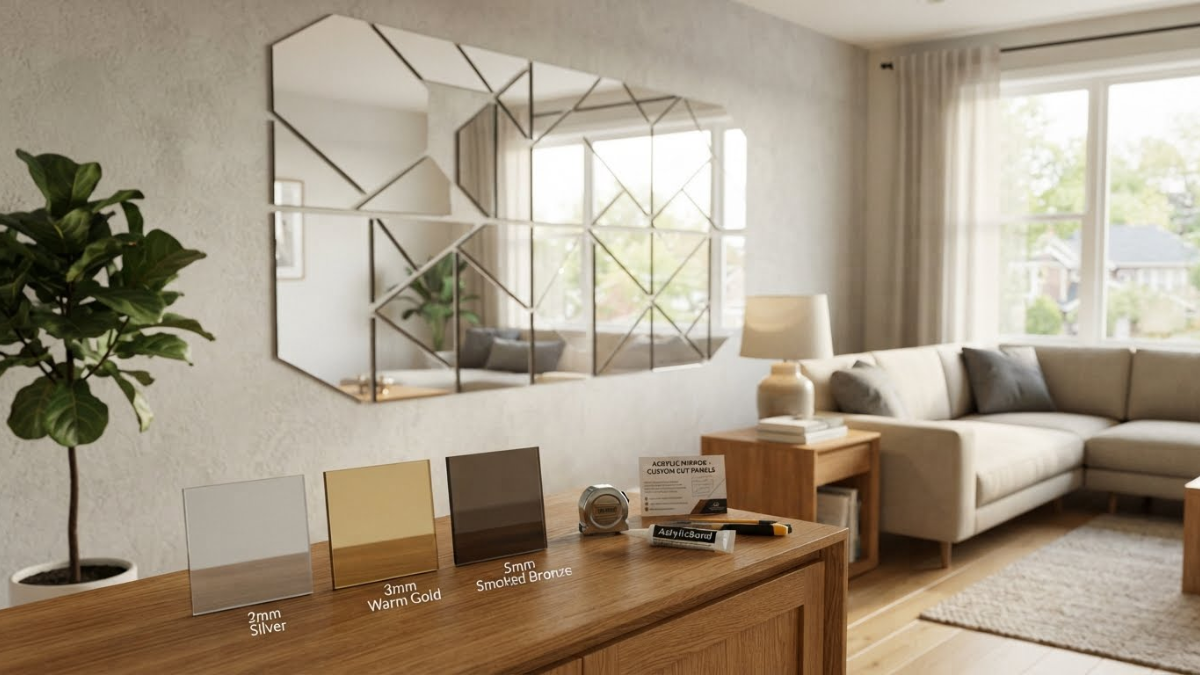
Before you buy acrylic mirror for decorative panels, consider the finish, dimensions and mounting surface together. Reflective acrylic can enhance interiors, displays and furniture, but its flexibility affects image quality. For Australian buyers, planning the complete installation helps avoid a panel that looks attractive as a sample yet disappoints once fitted.
Table of Contents
Key Takeaways
- Decide whether the panel needs accurate reflection or decorative impact.
- Assess finishes under the intended lighting.
- Choose thickness according to panel size and support.
- Confirm backing, adhesive and fixing compatibility.
- Plan fabrication and cleaning before ordering.
Define the Decorative Effect
Reflection or Visual Accent?
Decide whether the panel should provide a recognisable reflection or introduce reflective colour. Small furniture inserts have different requirements from large wall panels.
Where image accuracy matters, assess a representative panel using the proposed backing and mounting method. A small sample can help with colour selection but cannot establish how a large installation will reflect.
Check Colour and Lighting
Compare samples against nearby paint, timber, fabrics and fittings. Silver creates a conventional mirror effect, while coloured finishes can change the appearance of reflected objects.
View the intended position from several angles. Reflections from windows and spotlights may become distracting once the panel is installed.
Buy Acrylic Mirror to Suit the Installation
When you buy acrylic mirror, confirm the grade, finish, thickness and dimensions. Explain whether it will be framed, bonded to furniture or mounted against a wall.
Match Thickness to Support
Thickness affects rigidity, weight and cost, but no single thickness suits every decorative panel. Provide finished dimensions and support details when requesting advice.
A thicker sheet cannot compensate for an uneven backing or unsuitable mounting. Confirm the complete installation method before purchasing.
Specify Fabrication Clearly
Provide measurements in millimetres and dimensioned drawings for curves, holes and cut-outs. Identify exposed edges and confirm the required finish.
Ask about available fabrication services, cutting tolerances and handling instructions. Include processing costs when comparing quotations.
Prepare a Flat, Compatible Backing
Acrylic can follow irregularities in its supporting surface. A smooth, rigid, flat backing helps reduce distortion, although it may not eliminate it.
Follow the manufacturer’s mounting instructions. Confirm adhesive compatibility with the acrylic, reflective coating and protective backing before application.
Where mechanical fixings are specified, follow clearance and tightening guidance. Excessive pressure can cause local bending and distorted reflections.
Plan Cleaning and Everyday Care
Position panels to limit knocks and repeated surface contact. Acrylic can scratch when grit is rubbed across it.
Use approved cleaners and clean, soft, non-abrasive cloths. Avoid dry rubbing, abrasive pads and unapproved glass cleaners. Keep product-specific care instructions available.
Summary
Choose decorative panels around appearance, support and maintenance needs. Confirm fabrication, mounting materials and total costs before ordering. Contact Plastic Warehouse to discuss options for your project.