

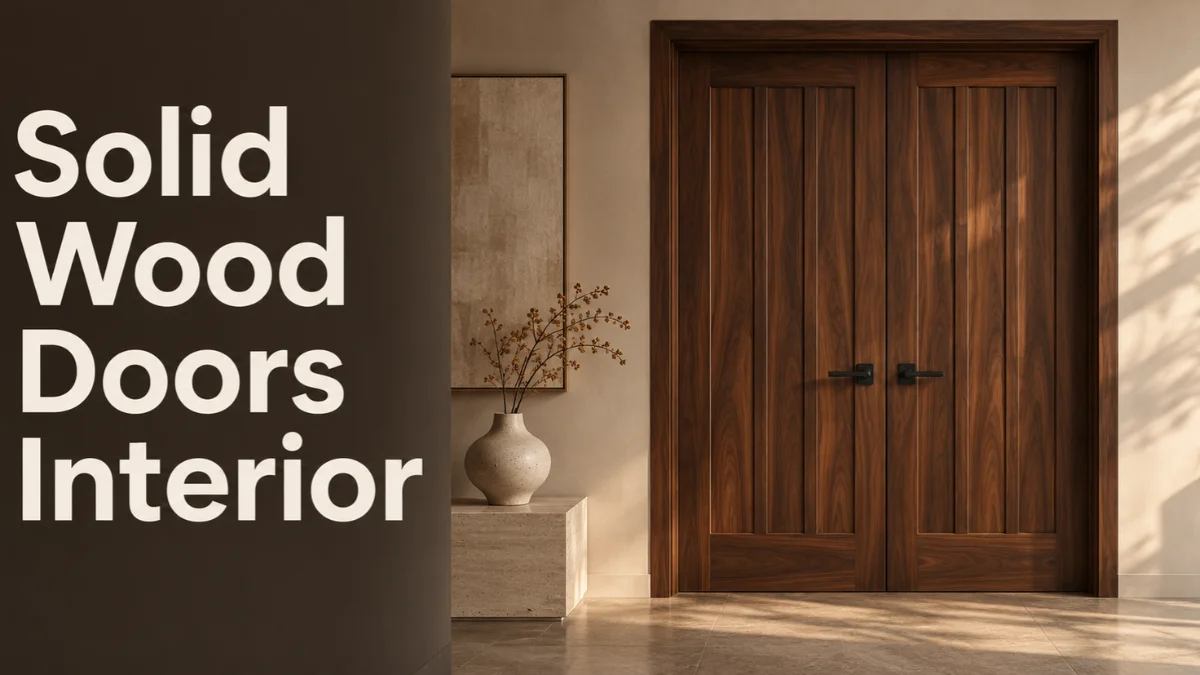
Choosing solid wood doors interior options can give your home more character, privacy, and a substantial feel. Real timber also offers repairable surfaces and natural grain that manufactured doors cannot fully copy. The tradeoffs are higher prices, extra weight, and more sensitivity to changing humidity.
Solid wood interior doors are made primarily from natural timber rather than a hollow or composite core. They are valued for appearance, durability, weight, and sound control. For most U.S. homes, pine and poplar suit tighter budgets, while oak, maple, alder, and walnut offer distinctive premium finishes.
Table of Contents
Solid Wood Interior Door Facts at a Glance
| Factor | What U.S. Homeowners Should Know |
|---|---|
| Construction | Made primarily from natural hardwood or softwood |
| Common species | Pine, poplar, alder, oak, maple, cherry, walnut |
| Typical slab price | Often about $150–$600+, depending on wood and design |
| Premium options | Custom hardwood doors may cost substantially more. |
| Main strengths | Natural appearance, repairability, weight, sound reduction |
| Main drawbacks | Price, weight, seasonal wood movement |
| Good locations | Bedrooms, offices, living spaces, libraries, primary suites |
| Installation choices | Slab or prehung |
| Finish choices | Paint, stain, clear coat, or factory-applied finish |
Current U.S. pricing varies widely because species, dimensions, construction, finishing, and installation all affect the final bill. HomeAdvisor reports premium prehung wood doors starting around $160 and reaching $590 or more. Broader installation projects can cost more once trim, hardware, framing, and labor enter the budget.
Key Takeaways
- Real-wood doors cost more than basic hollow-core models.
- Pine and poplar are practical choices for painted doors.
- Oak, maple, alder, cherry, and walnut suit visible stained finishes.
- Heavy doors may need stronger hinges and accurate installation.
- Wood can expand or contract as indoor humidity changes.
- Prehung doors simplify many replacements involving damaged or uneven frames.
- Slab doors can save money when the existing jamb remains square and usable.
What to Know Before Buying Solid Wood Doors Interior
Start by deciding why you want to replace the existing door. A bedroom may benefit from better sound control, while a hallway door may be chosen mainly for appearance. Closets often need less acoustic performance, making an expensive hardwood upgrade less necessary.
Real wood should not be confused with a solid-core manufactured door. A solid-core model usually has an engineered fiber or composite center beneath a molded or veneered surface. A genuine timber door uses natural wood as its primary structural material.
The distinction matters because each construction behaves differently. Solid-core doors usually cost less and remain dimensionally stable under changing indoor conditions. Natural timber offers authentic grain, easier refinishing, and the feel many homeowners associate with traditional millwork.
Solid Wood vs. Solid Core vs. Hollow Core Doors
| Door Type | Construction | Sound Control | Cost | Weight | Best Fit |
|---|---|---|---|---|---|
| Solid wood | Natural timber components | Strong | Higher | Heavy | Bedrooms, offices, visible living areas |
| Solid core | Dense engineered core | Good | Midrange | Heavy | Bedrooms, bathrooms, media rooms |
| Hollow core | Lightweight frame and hollow interior | Limited | Low | Light | Closets, pantries, budget projects |
Hollow-core doors remain popular because they are inexpensive and easy to handle. Their lighter construction also places less load on hinges and frames. The downside is weaker noise control and a less substantial closing feel.
Solid-core doors occupy the middle ground for many renovations. They can provide useful sound reduction without the full price of premium hardwood. They are also less affected by seasonal wood movement than many natural-timber designs.
Solid wood is most compelling where the door becomes part of the room’s visual design. It works especially well near hardwood flooring, wood cabinetry, built-ins, or traditional trim. Digestley’s coverage of flooring choices can help homeowners coordinate grain, tone, and surrounding materials throughout a renovation. Digestley’s flooring and home-aesthetics guide
Best Wood Species for Interior Doors
Pine remains a common choice when budget is a concern. It is softer than many hardwoods, so dents can appear more easily in busy households. Its visible knots and grain can suit farmhouse, cottage, rustic, or casual interiors.
Poplar is often selected for painted millwork because its grain is relatively understated. It provides a cleaner base when homeowners want the door color to lead the design. That makes it practical for Shaker profiles, transitional rooms, and painted trim packages.
Oak has a more noticeable grain and works well when the wood itself should remain visible. White and red oak can complement hardwood floors, cabinetry, and traditional millwork. Oak usually costs more than basic softwood alternatives.
Maple has a finer appearance with less dramatic grain than oak. It suits modern or transitional rooms that need natural warmth without heavy visual texture. Cherry and walnut move further into premium territory because their color and appearance become major design features.
Alder provides another useful middle option, especially for rustic or warm interiors. Knotty alder has visible character, while clearer grades create a more restrained appearance. The right choice depends more on finish goals than on selecting one universal “best” species.
How Much Do Solid Wood Interior Doors Cost?
Current market guides show broad price ranges instead of one standard figure. Genuine wood slabs commonly begin around $150 and can exceed $600 for better species or more detailed designs. Premium and custom hardwood models may climb well beyond those figures.
Installation changes the budget because the door itself is only one component. HomeAdvisor currently places typical interior-door installation projects between $363 and $1,241, with an average around $802. Those totals can include labor, trim work, hardware, frame changes, or removal needs.
For budgeting, separate the slab price from everything needed to make the opening work. Hinges, handles, finishing, delivery, jamb repairs, casing, and labor may each add cost. Comparing complete installed quotes gives a clearer picture than comparing door prices alone.
Slab or Prehung: Which Should You Choose?
A slab is the door panel without a new jamb assembly. It can make sense when your existing frame is square, undamaged, and correctly sized. The installer must still place hinges and hardware accurately so the new panel swings and latches properly.
A prehung door arrives mounted inside a new frame. This approach is useful when the old jamb is damaged, twisted, or being replaced during remodeling. It also helps when an opening needs a more predictable fit. Older homes can have openings that differ from today’s stock dimensions. Measure width, height, thickness, jamb depth, hinge locations, and swing direction before ordering.
Custom millwork becomes valuable when a standard slab would require excessive modification. If your project changes walls or openings, inspect the surrounding structure before demolition. Digestley’s explanation of load-bearing walls provides useful background for remodeling projects that go beyond a simple door swap. Digestley’s load-bearing wall guide
Are Solid Wood Doors Better for Sound and Privacy?
Door mass can help reduce sound transfer, which is one reason heavier doors work well in bedrooms and offices. Industry buying guides often place natural wood ahead of hollow-core construction for acoustic performance. Gaps around the jamb and floor still affect the finished result.
A premium door cannot compensate for poor installation. Large perimeter gaps create easy paths for voices, television noise, or office calls. Correct alignment, suitable stops, and appropriate seals can therefore matter alongside the door material.
Glass panels also change acoustic performance. They can bring borrowed light into dark rooms, but they may reduce the door’s ability to control noise. Choose them where daylight matters more than maximum privacy.
Can Solid Wood Doors Be Used in Bathrooms?
Natural timber can be used in some bathrooms, but moisture management deserves attention. Wood expands and contracts as surrounding moisture levels change. Manufacturers and millwork suppliers therefore stress correct sealing and finishing on exposed surfaces.
A well-ventilated bathroom creates a friendlier environment than a damp room with persistent condensation. Species choice and finish quality also influence performance. White oak and other suitable woods may be considered when the manufacturer approves the application.
For a problem bathroom, a stable solid-core product may require less attention. That does not make natural timber unsuitable, but it changes the maintenance calculation. Always follow the door maker’s finishing and installation requirements.
Styles That Work in American Homes
Shaker doors have simple recessed panels and work across contemporary, farmhouse, and transitional interiors. Their clean geometry lets natural grain provide interest without elaborate carving. Painted Shaker profiles can also pair easily with modern trim.
Traditional raised-panel doors suit Colonial, craftsman-inspired, and formal interiors. Two-panel, four-panel, and six-panel patterns can create very different visual proportions. The profile should relate to nearby cabinetry, baseboards, and architectural details.
Flush designs create a simpler, more contemporary appearance. Sliding or barn-style formats can also help where a swinging leaf consumes valuable floor area. Digestley’s existing sliding-door guide covers that alternative when space planning matters more than a conventional hinged opening. Digestley’s sliding-door guide
Current renovation trends also favor natural materials, visible texture, and warmer finishes. Timber doors can support that direction without requiring a fully rustic room. Digestley’s 2026 renovation trends article provides more ideas for coordinating natural finishes with open-plan spaces. Digestley’s 2026 renovation trends guide
A Practical Room-by-Room Buying Strategy
Spend more where a door affects privacy, noise, or the main sightlines of your home. Primary bedrooms, home offices, libraries, and formal living areas are strong candidates. These locations allow the weight and grain of real wood to provide daily value.
Use simpler materials where the benefit is harder to notice. A lightly used closet may not justify the same hardwood specification as a bedroom. Mixing door construction strategically can control project costs while keeping important spaces upgraded.
Keep visible doors consistent when several appear in the same hallway. Matching panel layouts, heights, hardware, and finish creates a more intentional result. You can still vary construction in less visible rooms if the exterior appearance stays coordinated.
Installation and Maintenance Tips
Heavy doors place more demand on hinges, screws, jambs, and framing. Use hardware approved for the door’s weight and size. Accurate hinge placement reduces sagging, rubbing, and latch problems. Finish all surfaces according to the manufacturer’s instructions. That often includes the top and bottom edges, which homeowners can overlook.
A balanced finish helps protect the material as indoor humidity changes. Clean finished wood with products suitable for the coating rather than harsh cleaners. Minor scratches may sometimes be repaired or refinished more easily than damage to thin veneers. That repairability is one reason natural timber can remain attractive over a long service life.
Verdict: Are Solid Wood Interior Doors Worth the Cost?
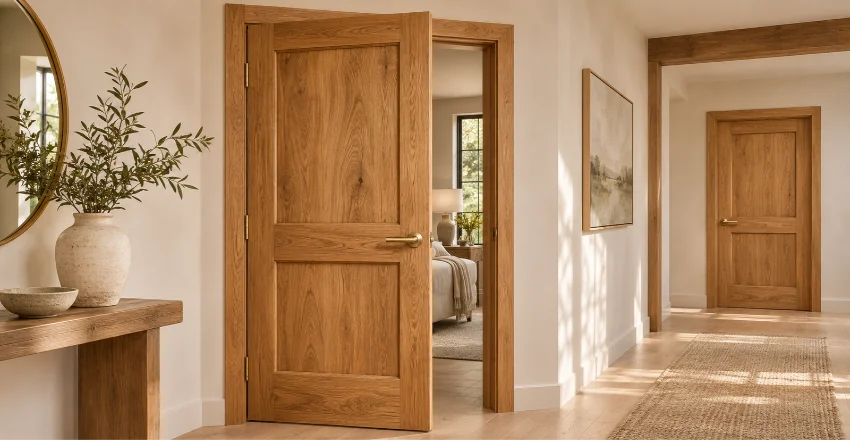
They are worth considering when appearance, tactile quality, repairability, and privacy matter more than the lowest upfront cost. Bedrooms, offices, main hallways, and design-focused renovations often benefit most. Closets and low-priority rooms may deliver little return from an expensive hardwood upgrade.
A mixed approach often gives U.S. homeowners the best budget balance. Use natural wood in prominent or privacy-sensitive rooms, then consider solid-core models elsewhere. This strategy concentrates spending where occupants will notice the difference.
Before ordering, compare complete costs rather than the slab alone. Confirm measurements, jamb condition, wood species, finish requirements, hardware, and installation charges. Those checks reduce expensive surprises after delivery.
Frequently Asked Questions
Are solid wood doors interior options better than solid-core doors?
Neither choice wins in every room. Natural timber offers authentic grain, repairability, and a premium feel, while solid-core doors usually cost less. Solid-core construction can also provide useful sound control with greater dimensional stability.
Your choice should follow the room’s function and budget. Real wood makes sense where appearance and material quality matter most. Engineered solid-core construction is practical when you want weight and privacy for less money.
What is the best wood for an interior door?
Pine and poplar work well when affordability or painted finishes matter. Oak, maple, and alder offer stronger decorative grain for stained applications. Walnut and cherry suit premium projects where the material becomes a major visual feature.
No single species fits every project. Compare hardness, grain, color, price, and finish before choosing. Also check whether the manufacturer approves the wood for your intended room.
How much should I budget for a solid wood interior door?
A basic genuine-wood slab may begin near $150, while many upgraded choices cost several hundred dollars. Premium hardwood, custom sizing, glass, carving, or factory finishing can increase the price substantially. Installation and hardware should be budgeted separately.
Ask contractors to separate material and labor costs in their estimates. This makes competing quotes easier to compare. It also shows whether frame repairs or custom fitting are increasing the total.
Do solid wood doors block sound?
Their extra mass can provide better sound control than lightweight hollow-core doors. The result also depends on gaps around the frame, undercut size, glass openings, and installation quality. A poorly fitted heavy door can still allow substantial noise through its perimeter.
For bedrooms or offices, consider the complete opening rather than the slab alone. Door seals and accurate alignment may improve privacy further. Check manufacturer acoustic ratings if sound reduction is a primary goal.
Can a solid wood door warp?
Wood naturally responds to humidity, so dimensional movement is possible. Proper drying, construction, finishing, and indoor humidity control reduce the risk. Following the manufacturer’s care instructions matters most in moisture-prone spaces.
Do not assume every movement problem means the slab itself is defective. A shifting jamb or loose hinge can also cause rubbing and alignment problems. Inspect the complete assembly before deciding on repairs.
Should I buy a slab or a prehung door?
Choose a slab when the current jamb is square, sound, and compatible with the new door. Choose prehung when replacing the frame or correcting an uneven opening. Prehung units can simplify alignment during larger renovation projects.
Measure before making that decision. Existing hinge positions, jamb depth, door thickness, and swing direction all matter. An installer can confirm whether reusing the old frame will save money without creating fit problems.
Final Buying Checklist
Before placing an order, confirm the opening size, jamb depth, swing direction, and desired hardware. Decide whether the room needs stronger privacy, premium appearance, or only basic separation. Then select the construction and species that match those priorities.
Compare at least the slab, finishing, hardware, delivery, and installation costs. Review the manufacturer’s humidity and maintenance requirements before choosing a bathroom application. Careful specification gives you a door that fits your home, not just the opening.